Skip to content
Top-rated outdoor gear, ranked

Best Of 2026

Best Adventure Trekking Poles of 2026

Our top 10 picks, independently ranked. Budget to premium.

Trekking poles are the rare piece of hiking gear that pays you back on every step. They take load off your knees on steep descents, add two points of contact on loose or wet ground, steady a heavy pack across stream crossings, and double as tent poles for many ultralight shelters. For hikers, backpackers, and adventure travelers, a good pair is less an accessory than a second set of legs.

The market runs from about $25 to nearly $300, and the money buys real, specific things. As price climbs you move from heavier 6061 aluminum to stiffer 7075 aluminum and then to carbon fiber, which cuts swing weight so your arms stay fresh over long days. You also pay for better locking mechanisms that never slip, moisture-wicking cork grips that mold to your hand, and folding Z-pole designs that collapse small enough to stash in a daypack or check in luggage. A $40 pole and a $250 pole will both get you up the mountain. The expensive one just does it lighter, quieter, and with fewer fiddly failures over thousands of miles.

We researched across that whole spread so you can shop by what you actually need rather than by brand hype. Weekend day hikers do not need to spend $250, and thru-hikers counting grams should not settle for a two-pound budget pair. Below, each pick is tagged budget, mid, or premium, with an honest read on who it serves best.

At a glance

DynaLock Ascent Carbon Backcountry Poles
Best OverallPremium

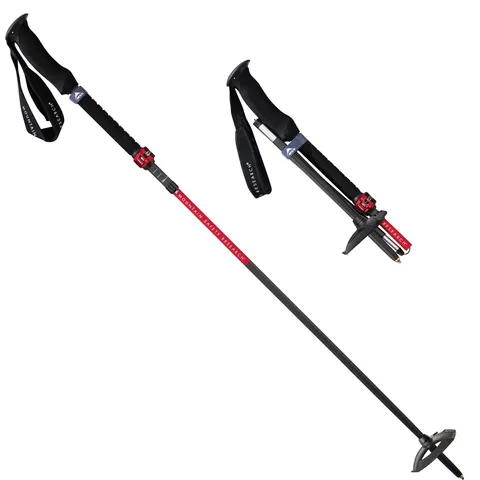
1. DynaLock Ascent Carbon Backcountry Poles

MSR

$170–$200

After hundreds of testing miles across reviewers, this Kevlar-reinforced carbon pole hit the rare balance of folding packability, rock-solid locks, and four-season versatility that makes it the pole most hikers should buy.

Best for: Backpackers who want one do-everything pole for summer trails and winter snow

Kevlar-reinforced carbon shafts stay light yet handle heavy backpacking loads · DynaLock levers adjust tool-free and hold without slipping · Folds compact and includes both trekking and snow baskets for year-round use

The carbon finish scuffs and scratches quickly · Premium price is a lot for occasional day hikers
Pursuit Trekking Poles
Best ValueMid-range

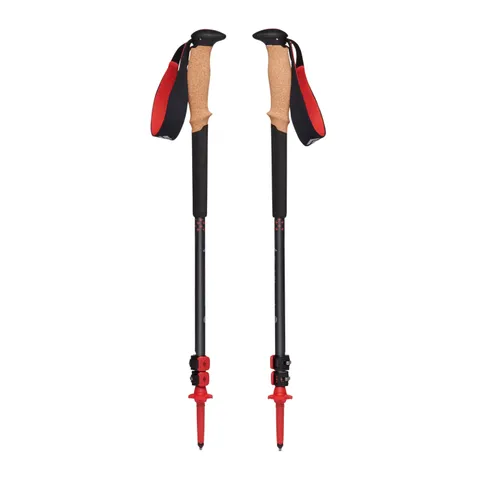
2. Pursuit Trekking Poles

Black Diamond

$120–$160

Reviewers repeatedly named the Pursuit the most comfortable pole they tested, and one pair survived the full Continental Divide Trail of more than 2,000 miles. Excellent grips and locks at a fair price make it the value sweet spot.

Best for: Day hikers and backpackers who want lasting comfort without overpaying

Ergonomic cork grip and generously padded strap lead the class for comfort · Reliable FlickLock adjustment holds firm under load · Proven durability over thousands of trail miles

Aluminum build is heavier than carbon rivals · Telescoping design packs longer than folding poles

Distance Carbon FLZ Trekking Poles
Premium

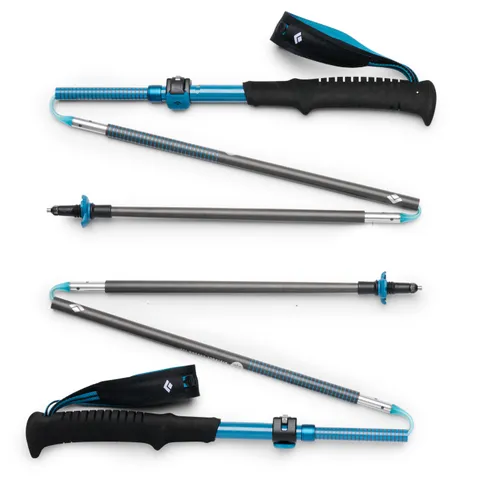
3. Distance Carbon FLZ Trekking Poles

Black Diamond

$210–$240

The go-to folding carbon pole for fastpacking and ultralight trips. It collapses small enough for a running vest yet keeps FlickLock Pro length adjustment for on-the-fly tweaks.

Best for: Fastpackers, peak baggers, and ultralight backpackers who value packed size

Very light carbon shafts with low swing weight · Folds down short for packs, vests, and air travel · Keeps the length adjustability that most folding poles drop

Carbon can crack under sideways force in rocky terrain · Foam grips wear faster than cork over big miles

Carbon Fiber Quick Lock Trekking Poles (Cork Grip)
Best BudgetBudget

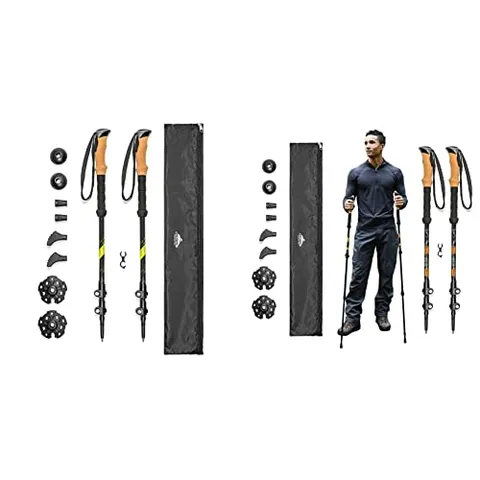
4. Carbon Fiber Quick Lock Trekking Poles (Cork Grip)

Cascade Mountain Tech

$40–$70

Carbon shafts, cork grips, and carbide tips for well under half the price of the big brands. It is the value benchmark that keeps landing on best-of lists.

Best for: First-time buyers and day hikers who want carbon on a tight budget

Real carbon fiber and cork grips at a budget price · Complete kit with multiple baskets and tips included · Comfortable once the cork molds to your hand

Heavier and less packable than premium carbon · Bulky quick-locks feel less refined

Makalu Lite Cork Trekking Poles
Mid-range

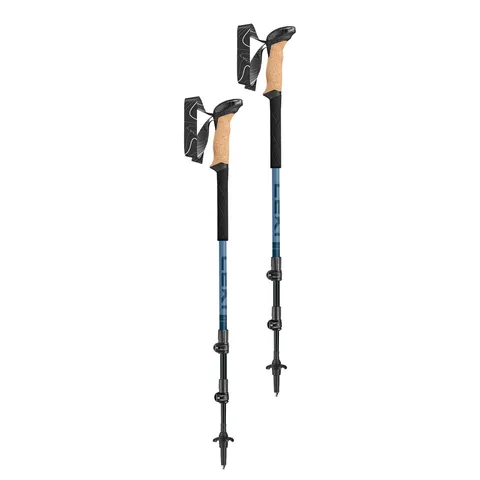
5. Makalu Lite Cork Trekking Poles

Leki

$140–$160

A durable, widely adjustable aluminum workhorse that many testers call the best all-around value in poles. It handles day hikes through multi-day trips without fuss.

Best for: Hikers who want one dependable aluminum pair for everything

Huge adjustment range fits nearly any user, tall or small · Sweat-wicking cork grips and proven Leki locking system · Strong durability for the price

Does not pack down small for travel · Wrist straps are thinner and less plush than rivals

LT5 Three Piece Carbon Trekking Poles
Editor's PickPremium

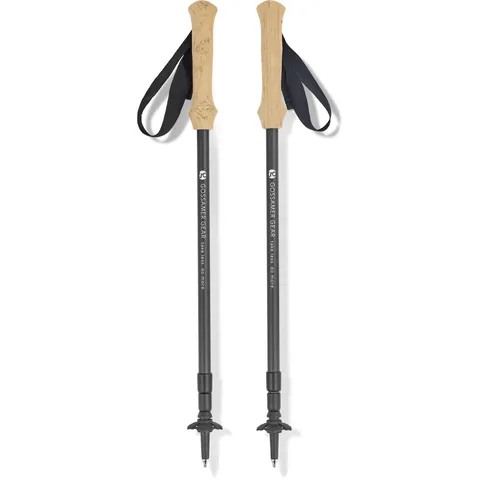
6. LT5 Three Piece Carbon Trekking Poles

Gossamer Gear

$185–$195

At roughly 5 ounces per pole, these are among the lightest adjustable carbon poles made, and they pair perfectly with trekking-pole shelters. An ultralight cult favorite.

Best for: Gram-counting thru-hikers and ultralight shelter users

Astonishingly light at about 10 ounces per pair · Fully adjustable telescoping carbon design · Ideal partner for ultralight tents and tarps

Twist locks can slip in cold or wet conditions · Thin shafts demand careful handling in rocks

Black Series FX Carbon Trekking Poles
Best PremiumPremium

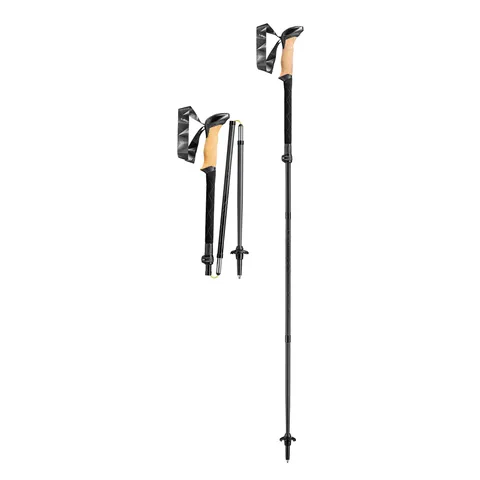
7. Black Series FX Carbon Trekking Poles

Leki

$240–$270

Often called the Cadillac of trekking poles: folding carbon, plush cork grips, and Leki's excellent locks in a heavily featured, beautifully built package for those who want the best.

Best for: Buyers who want a top-tier folding pole and do not mind paying for it

Premium carbon build folds to a compact 16 inches · Extremely comfortable cork grips and light straps · Top scores across durability, comfort, and packability

The most expensive pole here by a wide margin · Not meaningfully better on the trail than cheaper high-end poles

Mid-range

8. Trail Ergo Cork Trekking Poles

Black Diamond

$120–$140

A rugged three-section aluminum pole with a forward-angled cork grip that shines on steep, technical ground. Built to take abuse without bending or shattering.

Best for: Hikers hard on gear who prize durability over low weight

Tough 7075 aluminum shrugs off hard use · Angled ergonomic cork grip suits steep terrain · Widely adjustable and useful in all seasons

Heavy at around 18 ounces per pair · Long collapsed length is awkward to pack for travel

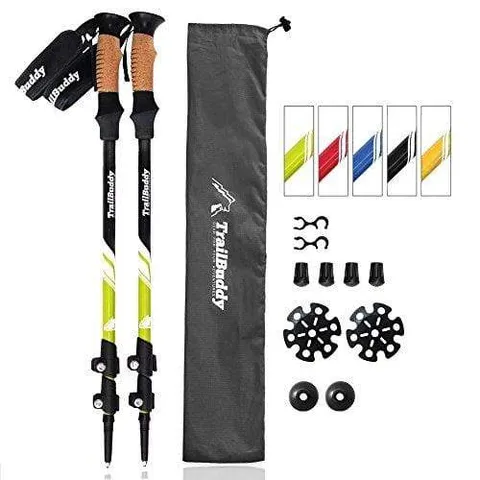
TrailBuddy Trekking Poles
Budget

9. TrailBuddy Trekking Poles

TrailBuddy

$30–$45

The most-reviewed poles on Amazon for good reason: strong 7075 aluminum, one-hand lever locks, and cork grips at a price that undercuts nearly everyone.

Best for: New hikers and casual walkers who want dependable poles cheap

Stronger 7075 aluminum than most budget poles · Easy one-hand lever locks and cork grips · Complete accessory kit for varied terrain

Heavier than carbon options · Less refined and less packable than premium poles

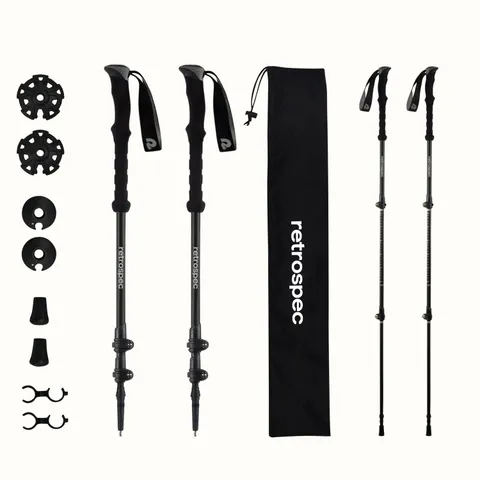
Solstice Trekking Poles
Budget

10. Solstice Trekking Poles

Retrospec

$25–$45

An unbeatable entry price for a collapsible aluminum pole with cork or foam grips and carbide tips. A no-risk way to find out whether poles are for you.

Best for: Budget shoppers and occasional hikers testing the waters

Very low price with a full accessory set included · Lightweight 6061 aluminum with a wide height range · Choice of cork or foam grips

6061 aluminum is less stiff than 7075 or carbon · Locks and finish feel entry-level

How we choose

We ranked these poles on the trade-offs that matter to people who walk long distances under load: weight and swing balance, lock security, grip comfort over sweaty miles, packed size for travel, and long-term durability. Rankings reflect overall value within intended use rather than raw price, which is why a $50 carbon pole can outrank a $250 one for the right hiker. Budget picks (roughly under $60) prioritize a low entry price and forgiving aluminum durability, mid-tier picks ($100 to $170) add cork grips, better locks, and lighter shafts, and premium picks ($180 and up) chase the lightest carbon, the most secure adjustment systems, and the smallest folded length. We draw on hands-on impressions plus published long-term testing from independent outlets, and we buy our own gear. No brand paid for placement, and our picks are not influenced by any retailer relationship.

Common questions

Most hikers benefit from a matched pair. Two poles balance the load across both sides of your body, protect both knees on descents, and give you stability on stream crossings and side-hills that a single stick cannot. A single pole can work for casual walking or when you want a free hand for a camera, but for backpacking under a heavy pack, buy the pair.

Aluminum, especially 7075, is tougher and cheaper, and it tends to bend rather than snap under sudden stress, which makes it the safer pick for rugged, rocky terrain and hard use. Carbon fiber is lighter and stiffer, so it swings with less fatigue over long days, but it can crack if pinched between rocks or torqued sideways. If you count grams and hike smoother trails, choose carbon. If you are hard on gear or travel far from replacements, choose aluminum.

Cork wicks sweat, resists odor, and slowly molds to your hand, which is why most premium poles use it. EVA foam is soft, light, and warm to the touch in cold weather, and it is common on lighter poles. Dense rubber shows up on some budget and winter poles but can get slippery with sweat, so it suits cold-weather use more than summer. For three-season hiking, cork or foam is the comfortable default.

With a pole planted and your hand on the grip, your elbow should sit at roughly a 90-degree angle on flat ground. Adjustable poles let you shorten them a few centimeters for climbs and lengthen them for descents. As a rough starting point, multiply your height in centimeters by 0.68. Almost every pole here adjusts, so you do not have to nail the number at purchase.

Folding Z-pole designs break into three tent-pole-style sections and collapse to around 15 to 16 inches, short enough for a carry-on or daypack. Telescoping poles slide down into themselves and pack longer, but they usually offer a wider height range and a bit more rigidity. If airline travel or stowing poles on a small pack matters most, go folding. If maximum adjustability and stiffness matter more, telescoping wins.

Yes, and many ultralight shelters are designed for exactly that. Trekking-pole tents and tarps drop the weight of dedicated tent poles by using the poles you already carry. Check the required pole length for your shelter, often around 115 to 125 cm, and confirm your poles extend or lock to that height before you rely on them in the field.

Some links are affiliate links, and we may earn a commission at no extra cost to you. It never affects our rankings.

In your pocket

Take the whole adventure with you.

Free, no account needed. GPS tracking, trail maps, and wildfire alerts in your pocket.

  • Every tour and outfitter in your pocket

  • GPS-track the whole day, hands-free

  • Wildfire alerts near where you’re headed

  • GPS tracking that keeps recording past the trailhead

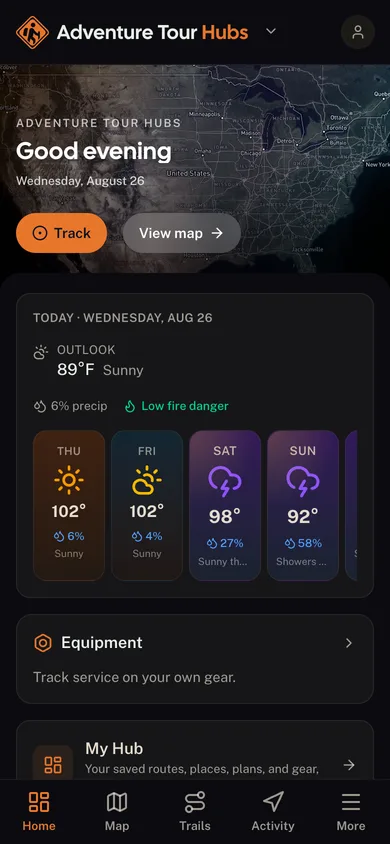
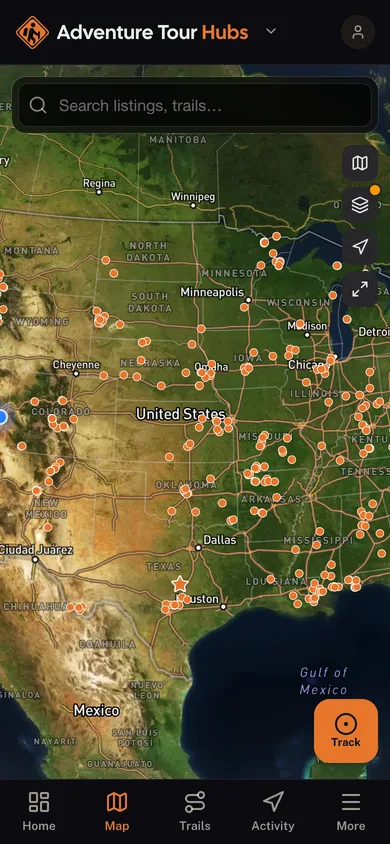
The Adventure Tour Hubs app dashboard

For operators

Run your adventure business?
Launch your branded surface.

Get your own branded surface in the Adventure Tour Hubs app and a directory listing in minutes. bookings, digital waivers, and your whole operation in one cockpit.