Every guide service uses some version of a difficulty scale. Hiking outfitters classify trails by class. Whitewater operators rank rapids from I to VI. Climbing guides reference the Yosemite Decimal System. The problem: none of these scales are universal, and "moderate" on one operator's website might feel like "hard" on another's. Before you book a multi-day expedition or a guided climb, you need to decode what a rating actually means for your fitness, experience, and expectations. This guide walks you through the major grading systems so you can make an honest assessment of whether a tour fits your level.
The Standard Hiking Classifications
Most US hiking guides use the Yosemite Decimal System for trails, which ranges from Class 1 (a walk on a maintained trail) to Class 5 (roped technical climbing). Here's what guides mean by each class when advertising their tours.
Class 1 and Class 2 hiking is straightforward: maintained paths, low exposure, no scrambling. A guide calling a hike "Class 2" is describing something anyone with normal fitness can handle. Class 3 introduces scrambling: you'll use your hands to climb, and the exposure is real enough that a fall could seriously injure or kill you. That's why some parties carry a rope for a Class 3 section even though most people move through it unroped. This is where the gap between casual hikers and the backcountry crowd opens up. Many first-timers underestimate Class 3 because they conflate "hands on rock" with "rock climbing." It isn't roped climbing, but "not technical" does not mean "not dangerous."
Class 4 scrambling is where most recreational guides draw their line. Rock is larger, exposure is severe, and handholds are critical. You need solid footwork and the ability to place your weight with confidence. A fall on Class 4 terrain is usually fatal, which is why guides frequently rope clients through it, not for liability, but because the consequences of a slip are so high. Class 4 adventures attract experienced hikers who've done plenty of Class 3 terrain. If a guide describes their route as Class 3 or 4, ask what percentage is Class 4. An 8-mile hike with two pitches of Class 4 feels very different from six miles of constant Class 4 scrambling.
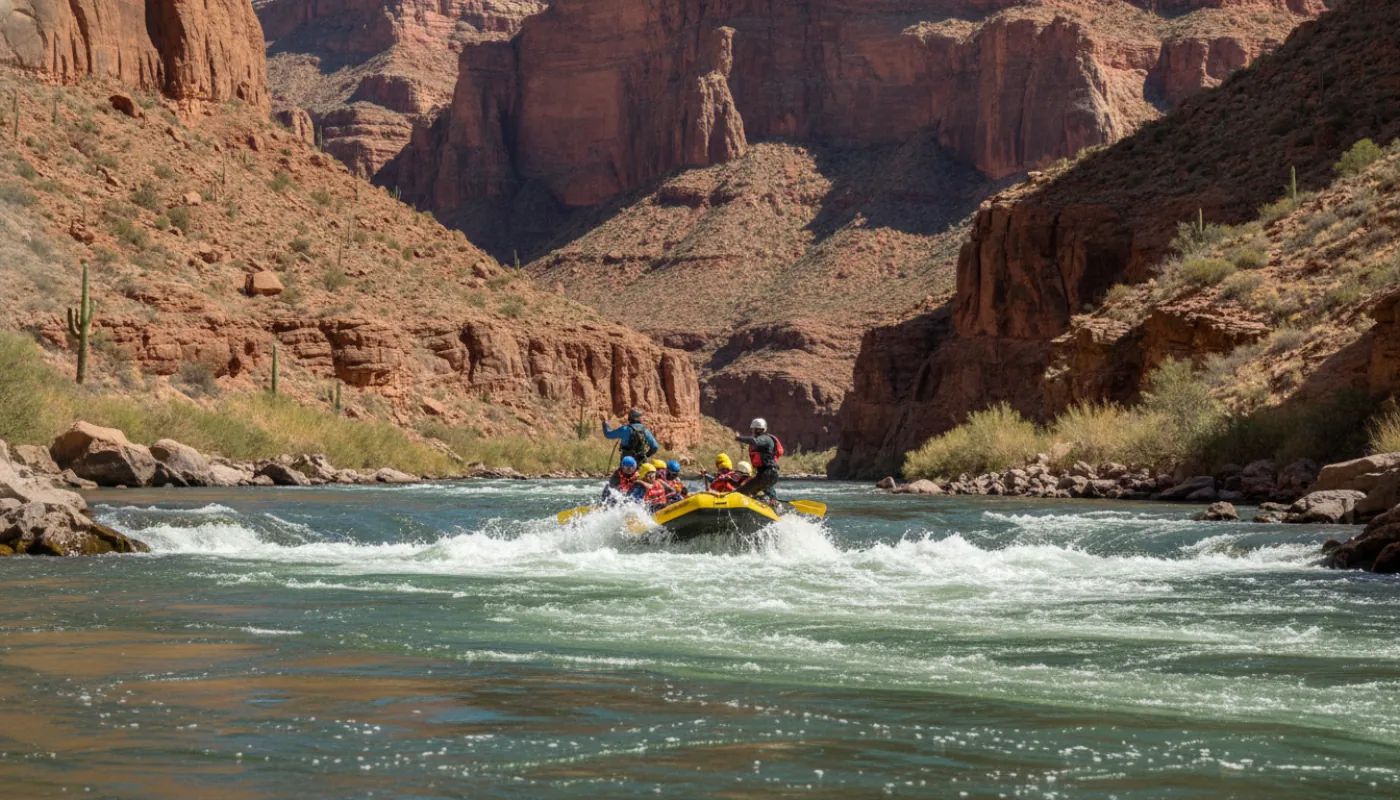
Whitewater Difficulty: The International Scale
Whitewater operators almost universally use the International Scale for rapids, numbered I through VI (some guides add a "+" for particularly nasty sections). This scale is more intuitive than hiking classes because it directly describes what the water does, not your climbing ability.
Class I rapids are gentle waves, manageable by anyone in a boat. Class II brings bigger waves, maybe a small hole, but few obstacles, the territory of family floats. A guide marketing a "Class II family trip" is being honest: your family will get wet, but you won't be pinned against a rock. Most commercial rafting, though, operates in Class III–IV: Class III is the most common commercial product, and plenty of outfitters run Class IV on rivers like the Gauley, Ocoee, and Arkansas. Class III rapids feature larger waves, stronger currents, and real obstacles: rocks, undercuts, maybe a hole that requires active navigation to avoid. How hard is a guided rafting trip at this level? You need to respond to the guide's commands, shift your weight, and paddle when told.
Class IV introduces big water, powerful holes, and hazards like waterfalls, rocks in the middle of the channel, or boils that can flip a raft. A guide running Class IV water is managing serious risk. Many commercial outfitters do run Class IV, it's the backbone of marquee runs like the Gauley and Ocoee, but expect a guide with thousands of river miles and a meticulously maintained raft. Above IV the scale keeps going: Class V is expert water with long, violent rapids and a genuine risk of serious injury or death, run commercially only by a few specialized outfitters, and Class VI is considered near-unrunnable. The jump in consequence from III to IV to V is steep, each step up is a different level of risk, not just bigger waves.
Climbing Grades: Yosemite Decimal and Sport Climbing
Rock climbing uses the Yosemite Decimal System (YDS) for traditional and free climbing, with 5.0 to 5.15 representing increasing difficulty. The key insight: the 5.10 to 5.11+ range has become the sport where most climbers spend their time, and guides have adapted accordingly.
A guide offering "5.6 to 5.8" introductory climbs is targeting people with zero climbing experience. These grades involve basic moves, positive handholds, and routes where you can lock off and rest. If you've never climbed, 5.6 will feel hard. If you've climbed for a few months, it'll feel easy. Five-point-nine and 5.10a mark the threshold where climbing becomes less about strength and more about technique: body positioning, rhythm, and understanding how rock feels under your hands.
Technical vs. non-technical is a false binary. A guide saying "technical climbing" usually means Class 4+ scrambling or Class 5.0–5.4 climbing, where handholds matter but exposure is manageable. Don't equate "technical" with "expert." Some of the best mountaineering guides spend their careers in the "technical but not expert" range because that's where the clients are. The Yosemite Decimal grades beyond 5.10 assume you've already put in gym time and sport climbing experience.
Reading Between the Lines: What Guides Don't Say
Difficulty ratings describe the physical challenge, not the mental one. A Class 3 hike with 4,000 feet of elevation gain is technically "Class 3," but it will obliterate a hiker who's only done Class 2 day hikes. Ask guides for context: elevation gain, distance, pace, time at elevation, exposure type, and whether the crux (hardest section) comes early or late when you're tired.
Some guides soft-pedal their ratings for marketing. A Class 3 route with a mandatory Class 4 pitch might be advertised as "Class 3 with a brief 4 section." That brief section could be a 200-foot rock scramble that costs 45 minutes and leaves your arms burning. Operator reviews and photos matter here. Look for comments like "harder than I expected" or "the final scramble was steeper than I thought." These are clues that the rating undersells the experience. Fitness varies wildly too. "Moderate" on a sea-level trail is not the same as "moderate" on a mountain pass at 11,000 feet.
Matching Difficulty to Your Experience
The safest approach: find a guide with published client reviews and ask directly. Email them your experience level, show them your resume (trips you've done, peaks you've summited, rivers you've paddled), and ask whether their route is a good fit. Guides who ask questions in return are the ones worth trusting. Never jump two grades. If you've hiked Class 2 terrain, your next step is Class 3 with an experienced guide. If you've paddled Class II rivers, Class III should be your next goal, not Class IV. The difficulty curve accelerates exponentially.
Before booking, get confirmation in writing of the specific grading system the guide uses. Some regional outfitters have their own scales, and a "difficult" rating from a small Arizona guiding company might not mean the same thing as "difficult" from a Colorado climbing shop. Ask for the hardest section, not the average, the hardest. That hardest section is what you'll remember three miles into the trip. You should also verify that the guide has proper insurance and credentials and check their track record. Operator listings on Adventure Tour Hubs often include difficulty ratings and real client feedback, giving you a second opinion beyond the operator's own marketing language. The best trip isn't the hardest one, it's the one where you're challenged but never in doubt about your safety.