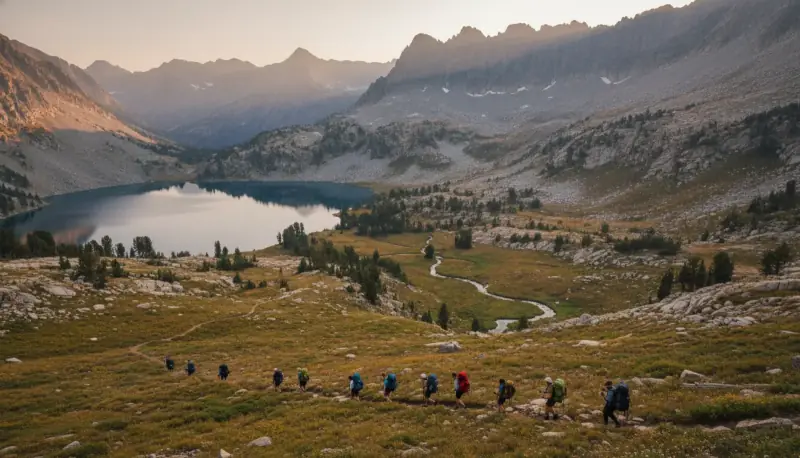
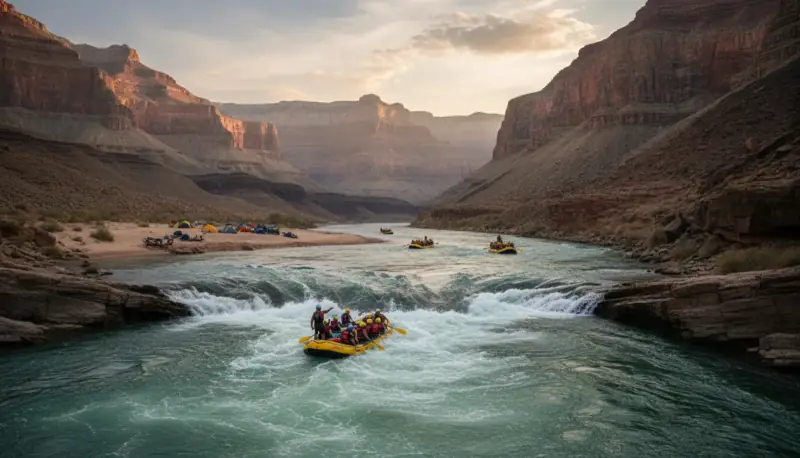
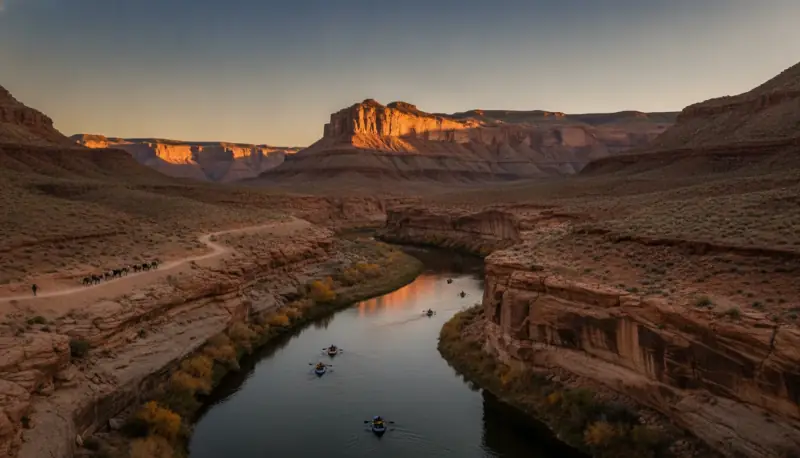
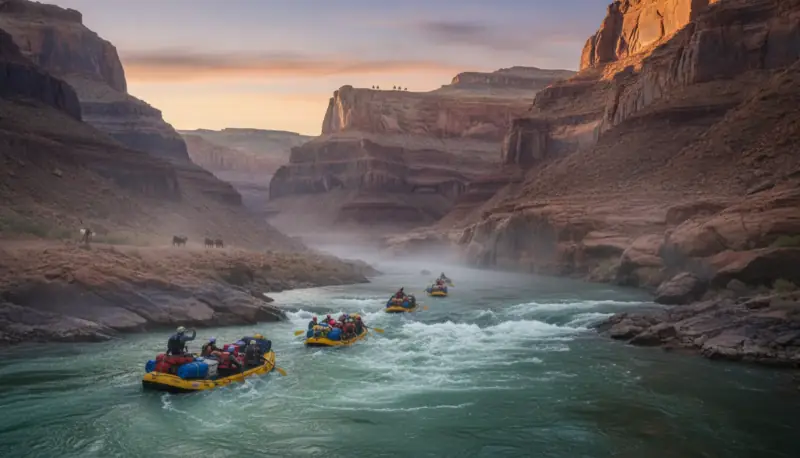
Rim-to-rim at the Grand Canyon sits in that tension between "famous trek" and "serious undertaking." It's the hike everyone's heard of but few complete: roughly 21 to 24 miles rim to rim, dropping about 4,800 feet to the Colorado River and climbing nearly 5,800 feet up the far wall. Over two intense days, you'll cross a desert, navigate switchbacks, and possibly hallucinate how many more turns exist in the Bright Angel Trail. The real question isn't whether you can do it. It's whether you should go guided or strike out alone, and that answer depends on experience, fitness, and honestly, how much company you want when things get hard.
Check current North Rim conditions before you plan anything. The Dragon Bravo Fire (July 2025) destroyed the historic Grand Canyon Lodge and most North Rim structures. As of 2026 the North Rim has reopened for day use only, no lodging, no campground, no food service, and no potable water on the rim (bottled water is sold at the general store during limited hours). The Park Service has also announced that traditional rim-to-rim hiking will not be possible once the North Kaibab Trail closes between Redwall Bridge and Cottonwood at the end of October 15, 2026, for reconstruction. Confirm trail, water, and rim status on the NPS North Rim status page before committing to a date.
The Grand Canyon itself doesn't care about your choice. The rock, heat, and elevation change remain constant whether you're trailing a licensed guide or reading a tattered trail report on your phone. But the experience, and your margin for error, shifts dramatically. Guided trips mean logistics handled, pacing set, and expertise on hand when something unexpected happens. Self-guided means total autonomy, cost savings, and freedom to stop and stare at the layers of geological time for as long as you want. Both require real preparation. Both deliver transformation.
What "Rim-to-Rim" Actually Means
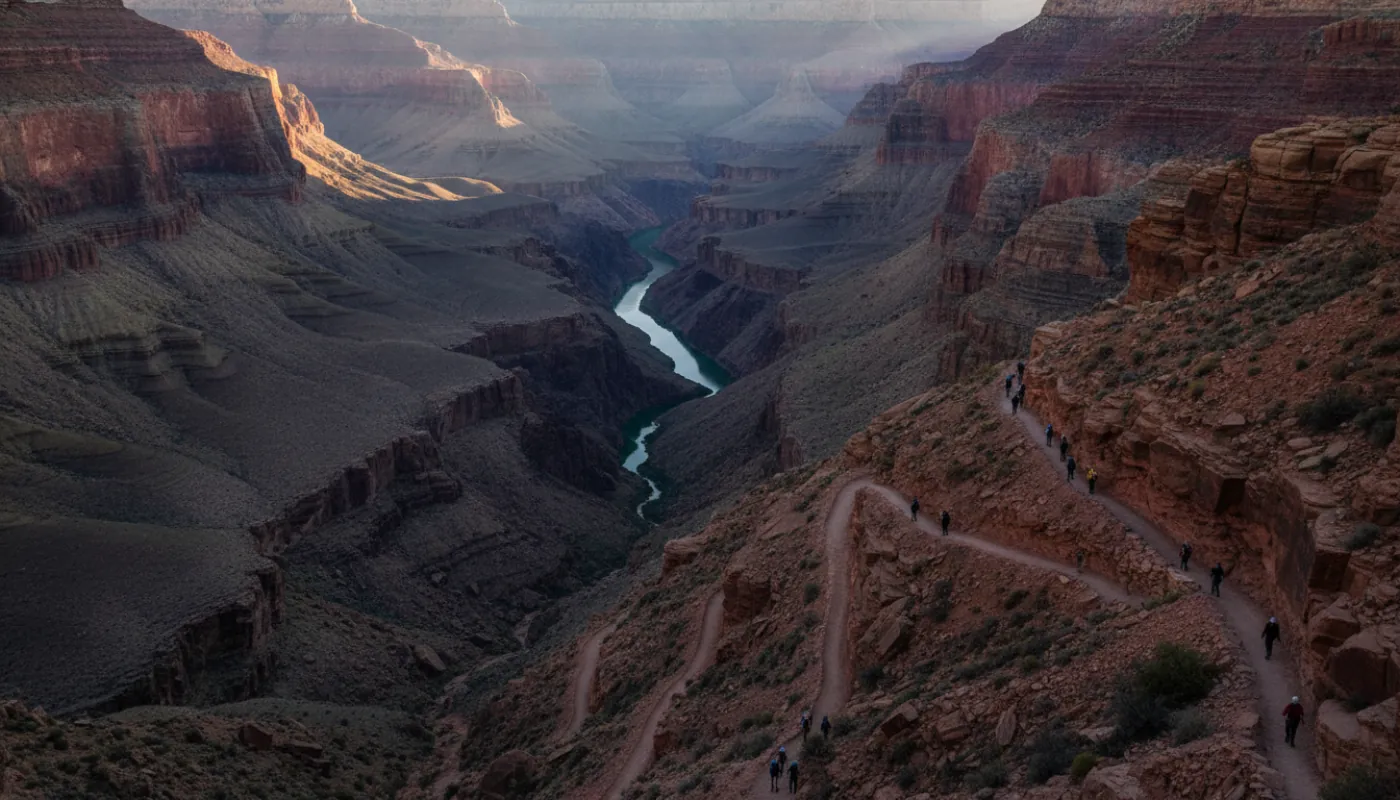
The route crosses the canyon from South Rim (where most visitors congregate) to North Rim (where most don't). The classic direction starts on the South Rim at either the South Kaibab or Bright Angel trailhead, drops roughly 4,800 feet through a compressed geological timeline, reaches the Colorado River and Phantom Ranch at about mile 7.5 (via South Kaibab) or mile 9.5 (via Bright Angel), then climbs the opposite wall on the 14-mile North Kaibab Trail to the North Rim. The shortest corridor pairing (South Kaibab down, North Kaibab up), runs about 21 miles end-to-end, while descending via Bright Angel instead pushes it closer to 23–24 miles.
Distance alone doesn't capture the difficulty. Elevation gain and loss are massive and rapid. Your quads and knees spend most of the descent reminding you why people invented switchbacks. The Colorado River crossing is psychologically crucial: you're at the bottom, committed, and climbing out of a place where inner-canyon temperatures regularly top 100°F, and can exceed 110°F, from late spring through early fall. Many people plan this as an overnight at Phantom Ranch (the only lodging inside the canyon), which splits the effort but requires a permit months in advance and costs substantially more than camping.
The seasonal window matters. North Rim facilities and the access road are typically closed from mid-October to mid-May due to snow and elevation. Even in summer, nighttime temperatures on the North Rim run 10–15 degrees cooler than the South due to elevation. Water is scarce, heat is intense, and the trail is exposed. This isn't a casual day hike that stretched into an epic story. This is a proper expedition that requires accurate planning and an honest fitness assessment weeks before you start. The Park Service is blunt about the deadliest version of the mistake people make here: do not attempt to hike from the rim to the river and back in a single day, a warning it repeats every summer as hikers die of heat and exhaustion trying. Rim-to-rim is a two-day trek for a reason.
Permit Reality and Planning Timelines
You need a permit to camp in the canyon, full stop. This is where guided and self-guided paths diverge immediately. Guided trips operate under a concession license, which means the outfitter secures the permit and campsite. You book a trip, pay the guide service, show up. Self-guided hikers apply for a backcountry permit directly through the National Park Service. Demand varies widely by season and campground: a Bright Angel Campground night in peak spring or fall is genuinely hard to land, while shoulder-season dates and less-trafficked sites are far more attainable than the "you'll never get a permit" reputation suggests. Check current rules and availability on the NPS Backcountry Permit page before you plan around any one date. If your first request doesn't clear, you can adjust dates or sites and reapply.
Popular corridor dates fill fast, so flexibility helps. Phantom Ranch adds a second, separate layer that's easy to conflate with the backcountry permit. A dorm bed or cabin at the Phantom Ranch lodge isn't a campground permit at all, it's booked through a distinct lodging lottery run by the park's concessioner, with its own calendar and odds. Camping at Bright Angel Campground nearby, by contrast, falls under the NPS backcountry permit described above. Many self-guided hikers pursue the campground permit and skip the lodge entirely; the two are awarded independently, so winning one says nothing about your chances at the other.
Guided outfitters handle all logistics: permits, meals, camp setup, and river crossings. Some provide accommodations at Phantom Ranch (a tidy set of cabins); others use a camp nearby. The tradeoff is cost: a guided rim-to-rim trip runs $1,500–$3,000 for two days, depending on the outfitter. Self-guided costs are lower in raw dollars (maybe $200 in permits and supplies if you camp), but require serious advance planning and a willingness to absorb the permit uncertainty. Neither is objectively "better." Guided removes uncertainty; self-guided removes cost and supervision.
The Guided Experience: What You're Paying For
A licensed guide brings three concrete assets: expertise, logistics, and presence during difficult moments. Grand Canyon guides operate under a National Park Service concession or commercial-use authorization and typically log years in the canyon. They know its quirks, water sources, weather patterns, and which sections of trail are most dangerous during certain seasons. They carry emergency communication equipment and know how to manage medical issues at elevation.
The pacing on a guided trip is carefully calibrated to prevent overexertion in heat. You start before dawn, take long breaks during the hottest midday hours (usually 2–4 p.m.), then resume in late afternoon. Meals are provided, water is managed, and rest stops are frequent. The guide watches for signs of heat illness or exhaustion and makes judgment calls you might miss about yourself. Many people find this pacing actually makes the hike enjoyable rather than a grueling endurance test. You're not hunting for the trailhead in darkness or navigating by downloaded map layers.
Guided trips also compress the exposure. A two-day guided rim-to-rim with an overnight at Phantom Ranch means most of your time is structured and supervised. The psychological benefit of that shouldn't be underestimated. Rim-to-rim in self-guided mode can feel isolating at mile 8 when your knees are complaining and the trail seems infinite. With a guide pointing out geological formations and managing pace, the experience becomes collaborative rather than confrontational. Cost is high, but so is the reduction in logistics stress.
Self-Guided: Full Autonomy with Full Responsibility
Once your backcountry permit clears, you own the entire experience. You'll navigate via trail markers and map, manage your own water caches (if caching), set your own pace, and make every decision about stopping, turning back, or pushing forward. Many experienced hikers prefer this. The canyon reveals itself differently when you're moving at your own rhythm and not bound to a group schedule.
The practical burden is substantial. You need accurate navigation, downloading offline maps and understanding topographic features is non-negotiable. Trail junctions exist where the wrong turn extends your day by miles. Water sources must be researched and verified. Corridor hikers rely mainly on the developed water stations along the trail (Phantom Ranch, Bright Angel Campground, and the seasonal rest houses), not natural creeks, but those stations are seasonal, and the aging Transcanyon pipeline breaks often enough that the Park Service regularly shuts sections off. The North Rim's water is currently off entirely. Never assume a tap is running: check the current water status before you go and carry the capacity to treat river or creek water if a station is dry. You'll carry all your food, water (or water-treatment equipment), camping gear, and a headlamp. Pack weight easily exceeds 40 pounds, which multiplies the strain on descent.
Fitness requirements for self-guided are genuinely different. You won't have a guide adjusting pace or calling a halt to rest. You must trust your own judgment about turning back and must be capable of continuing when exhausted. Heat management becomes your sole responsibility. Dehydration can escalate quickly in the canyon's low humidity, you lose sweat faster than you realize and may not feel thirsty until you're already behind on fluids. Many self-guided failures happen because hikers underestimated the cumulative strain of 21-plus miles with nearly 5,800 feet of climbing in heat. Coming in as an experienced multi-day backpacker matters here.
How to Choose What's Right for You
Start with honest self-assessment. Have you completed multiple multi-day backpacking trips in heat? Can you hike 12+ miles with 3,000 feet of climbing and still move well the next day? If you've done similar expeditions (Utah slot canyons, desert treks in heat, multi-day Sierra trips), self-guided is within reach. If your recent hiking is day hikes or short trips on maintained trails, guided is the better call.
Consider your permit timeline. Guided trips run year-round (with seasonal closures around North Rim winter weather). Self-guided means securing a backcountry permit, which carries no guarantees for any specific date. If you need to schedule this trip for a specific month, guided is far more reliable. If you have flexibility and don't mind waiting a year, self-guided is achievable.
Cost matters too. Guided trips approach $2,000 per person for budget outfitters; premium options exceed $3,000. That's real money. Self-guided is dramatically cheaper in direct costs but demands significant trip planning and fitness prep. If budget is tight, you can reduce costs by camping rather than using Phantom Ranch's cabins (if you win the lottery), but you still need time to plan and train.
Finally, ask what you want from the experience. Want to move at your own pace, camp under stars, and have the canyon mostly to yourself? Self-guided. Want expertise, a structured day, meals prepared, and the psychological safety of a licensed professional managing logistics? Guided. Both approaches deliver unforgettable encounters with one of Earth's most dramatic landscapes. The right choice is the one that matches your experience, timeline, and what you're seeking when you reach the Colorado River's edge.