Introduction
Guided whitewater rafting draws thousands of adventurers to North American rivers each year, but not all stretches deserve the trip. The best rivers combine technical challenge, landscape drama, logistics accessibility, and reliable guide services with proven safety records. This guide walks through four premier destinations where professional outfitters have refined multi-year operations, where the rapids earn their class ratings, and where the non-paddling hours (camp cooking, canyon views, wildlife), rival the white water itself. Whether you're booking your first guided trip or your twentieth, these rivers represent the gold standard for US-based adventures.
The Colorado River and Grand Canyon
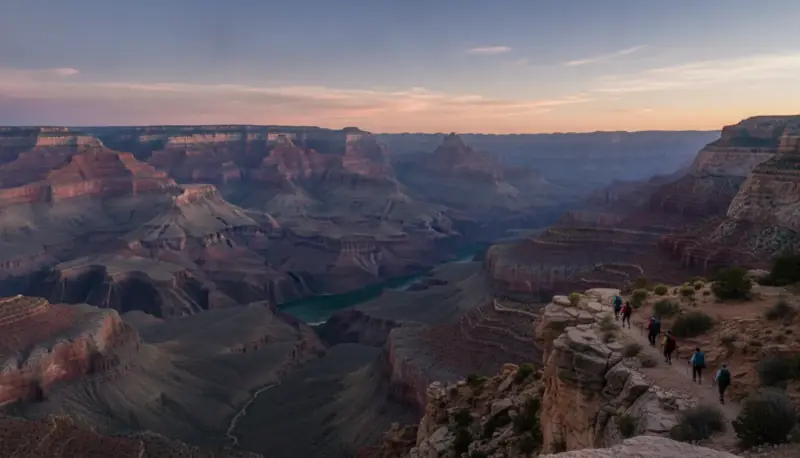
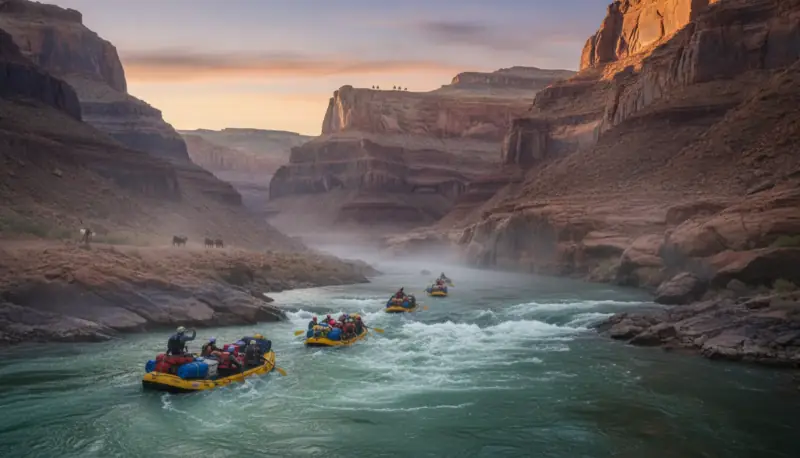
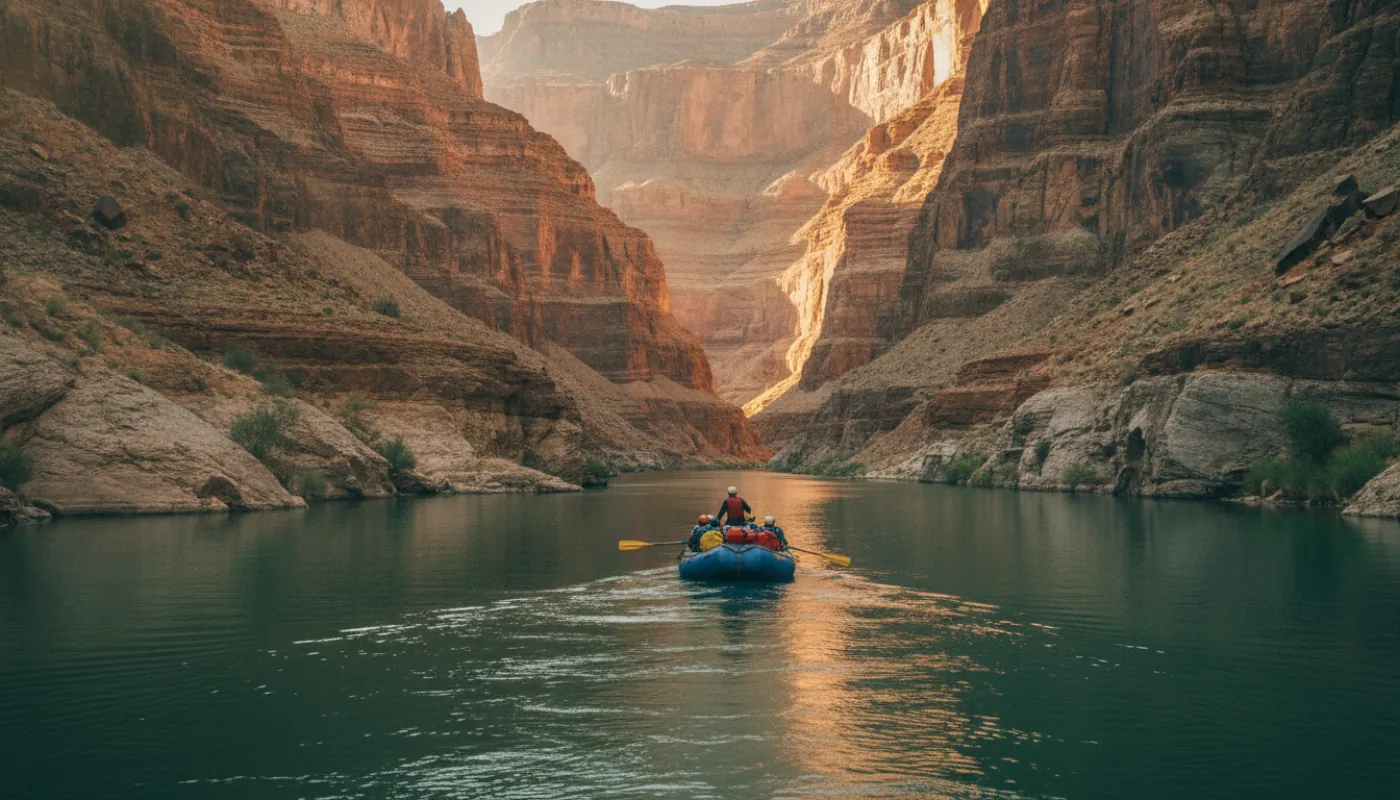
The Colorado River through Grand Canyon National Park stands alone: a corridor where geology and water converge to create the continent's most iconic river trip. The standard full-canyon run from Lees Ferry to Lake Mead covers roughly 277 miles (Diamond Creek, a common takeout, sits at mile 226). Oar-rig outfitters typically take five to seven days to complete the run, covering terrain that drops nearly 2,000 vertical feet through layers of stone spanning two billion years of Earth's history. The Grand Canyon rates its rapids on its own 1-to-10 scale rather than the international I–VI system, and the biggest (Lava Falls, Crystal, Hance), sit at the top of that scale, roughly equivalent to Class V water. They punctuate long, calm stretches ideal for absorbing Muav Limestone walls, side canyons, and the sheer scale of the chasm. On a big oar rig the guide rows the heavy water while guests ride it out, which is why full-canyon trips feel scenery-first even though the rapids themselves are serious.
Access to the Colorado is tightly controlled by the National Park Service, which licenses a fixed number of outfitters and rations launch dates by lottery. This constraint preserves the canyon's wilderness character but means booking a trip often requires registering for the next year's drawing. Professional outfitters shoulder all logistics: permit acquisition, motorized or oar-powered propulsion, camp food preparation, and all safety gear. First-timers frequently underestimate the physical demands of sitting in a boat for five days straight, but guides manage pacing and fatigue well on routes that emphasize scenery over technical difficulty. Cost is steep (expect $3,000–$5,000 per person), but justified by the once-in-a-lifetime access and full-service operation.
Gauley River, West Virginia
The Gauley River commands respect as one of North America's most consistent whitewater runs (the Upper Gauley is solid Class IV–V, the Lower Gauley an easier Class III–IV), drawing serious paddlers and those chasing genuine adrenaline. Located in south-central West Virginia, the Gauley earns its reputation through sustained technical rapids, complex eddy requirements, and water releases from the Summersville Dam upstream. The season is defined by those fall releases, which run on scheduled days from the Friday after Labor Day through mid-October (September 11–October 17 in 2026); outside the release days, summer flows drop to a trickle. Professional guide services have mapped every tricky line, memorized hole characteristics, and built clientele around weekend warrior trips that often pack four to five guide-led boats.
Gauley trips typically span one to two days, making them ideal for paddlers already comfortable in class III water but ready to step up. The river demands technical boat control (precise ferry angles, quick eddy peels, confident line choices), but guides read the water continuously and adjust pace based on client ability. The surrounding terrain is Appalachian forest, less dramatic than western canyons but intimately beautiful in its own way. Guides here tend to be entrepreneurial locals who've run the river hundreds of times and enjoy the puzzle of matching client skill to river conditions. Trips cost $300–$600 per person for a day, or $600–$1,000 for multi-day packages with camping. The Gauley attracts repeat customers precisely because improving paddlers can tackle the same river at progressively higher water levels.
Salmon River, Idaho
The main stem of Idaho's Salmon River rolls through the Frank Church Wilderness, some eighty miles of largely roadless terrain where the nearest town is a long drive away. The Salmon splits the difference between Colorado's scenic-tour sensibility and Gauley's technical focus: rapids run class III to IV across five to six days, scenery remains backcountry throughout, and solitude is genuine. The Wild section of the Main Salmon falls under the USFS Four Rivers Lottery, a permit is required, and launches are lottery-controlled from June 20 to September 7 (private applications run Dec. 1–Jan. 31 on recreation.gov). Commercial outfitters hold their own allocations, so booking a guided trip sidesteps the lottery, but no one simply shows up and launches in season. That wilderness character draws guides who prize the day-to-day rhythm of river life over the summit mentality of single-day conquests.
A separate, easier run (the Lower Salmon, below the town of Riggins), is shorter at three to four days, friendlier to first-timers than either the Main's Wild section or the Middle Fork, and falls outside the Four Rivers Lottery. Outfitters typically use oar rigs on the Main, reducing paddling demand and shifting focus to fishing, wildlife spotting, and thermal hot springs along the canyon. Class III rapids here are spaced generously, offering recovery time between sections. The corridor feels truly remote, yet professional outfitters have refined camp systems, tackle boxes, and evening meal services to a genuine art form. Water temperatures stay cool year-round, so wetsuits are standard. Cost falls in the $2,500–$4,000 range for a guided trip, with multi-day camping and all meals included. Guides tend to be younger, long-term river residents who've chosen the Salmon as home base rather than seasonal work.
Rogue River, Oregon
Southern Oregon's Rogue River delivers class III–IV rapids (Blossom Bar is the standout Class IV, while Mule Creek Canyon is a tight, dramatic gorge (Class II–III) rather than a big drop), alongside dramatic geology and a shorter window, making it ideal for those with limited vacation time or a lower tolerance for continuous white water. The Rogue drops from the Cascade Range toward the Pacific, passing through a canyon that tightens and loosens unpredictably. The lower canyon sections near the Oregon Coast are particularly scenic: granite walls, forest cover, and emerald pools between rapids create an intimate paddling experience. Professional outfitters know exactly which side streams reward exploration and where the best camps sit.
The Rogue's defining feature is its cultural history: the river corridor passes Native American heritage sites, historic homesteads, and gold-mining remnants that guides weave into the trip narrative. The Rogue is dam-regulated, so its flows are steadier than a free-flowing river (higher in spring and after winter rain, lower through summer), allowing outfitters to adjust trip dates and pacing seasonally. The Wild section (Grave Creek to Foster Bar) sits under a BLM-administered permit lottery for the May 15–Oct. 15 season, private boaters apply Dec. 1–Jan. 31 on recreation.gov, but commercial outfitters hold their own allocations, so a guided trip bypasses the draw. Trips typically include a mix of oar-powered boats and paddle rafts, accommodating paddlers of varying skill levels on the same run. Costs range from $1,500–$2,800 per person, lower than Colorado or Idaho trips but with equivalent guide expertise and infrastructure. Guides here often have strong ties to local communities and can recommend off-river hikes, viewpoints, and post-trip restaurants that extend the adventure beyond the water.
Selecting Your River: Key Criteria for Outfitter Vetting
Choosing between rivers means matching personal priorities (technical difficulty, trip length, budget, landscape type, and solitude), against what each river genuinely offers. Class ratings are starting points, not destinations. A class III with technical boulder gardens demands more skill than an easier class IV through large open waves. Ask prospective guides directly about the specific trip you're considering: typical client experience level, recent paddler feedback, water conditions on launch dates, and the guide's personal paddling background. Established outfitters share multi-year safety records openly; if a guide deflects on incident history, that's a signal to look elsewhere.
Logistics differ sharply by river. Colorado's permit scarcity and multiple-year lead times demand flexibility; Gauley's dam-release schedule rewards spring booking; the Salmon and Rogue both run lottery-controlled permit seasons in summer, though commercial outfitters hold allocations that spare you the draw. Trip length should match your vacation time and fitness: five days of sitting in a raft with minimal upper-body effort still causes fatigue in hip flexors, lower back, and shoulders. Cost includes guide expertise, food, equipment maintenance, and permits, but compare directly: similar-length trips on different rivers may vary wildly in what's included (camping versus lodge, meals versus snacks, transportation to the put-in). Finally, talk to paddlers who've run trips with specific guides. Online reviews capture satisfaction, but personal references reveal guide personality, some thrive on beginner confidence-building, others on technical precision. Find the fit that matches your adventure style, book well in advance, and expect the unscripted moments (wildlife encounters, surprise fishing success, a guide's well-timed story), to matter as much as the rapids themselves.