Packing for a multi-day guided rafting trip is not like packing for a weekend hiking trip or a car-camping adventure. River conditions, splash zones, limited shelter, and the reality of wet days demand a different approach. Your gear needs to handle rapid transitions between heat and cold, stay functional when soaked, and fit into a dry bag system. Most importantly, your decisions affect not just your comfort but the weight your guide has to distribute across the boat, a guide's job becomes measurably harder when clients show up unprepared.
This guide reflects the hard-won preferences of river outfitters and multi-day paddlers. It skips the "ultimate list" clichés and focuses on what actually works in the field, what you should leave home, and how to pack smart.
Clothing That Stays Functional When Wet
Your clothing system is the single largest differentiator between a comfortable trip and a miserable one. Cotton is your enemy: it absorbs water, loses all insulation value when wet, and dries slowly. Everything you bring should either dry quickly (synthetic) or retain insulation while wet (wool, neoprene).
Base layers should be synthetic or merino wool. Many experienced paddlers prefer merino for multi-day trips because it regulates temperature better than synthetics and manages odor without daily washing. Bring three to four layers total, one or two for daytime, extras for cold nights and rapid weather shifts. Long sleeves offer sun and brush protection; if your trip includes canyon sections where overhanging vegetation is common, sleeves become mandatory, not optional.
For outerwear, a lightweight synthetic or fleece jacket packs small and dries fast. A rain shell adds minimal weight and prevents the wind-chill spike that hits when you're wet and accelerating downstream. Avoid puffies and down, they're worthless when wet. Neoprene or synthetic shorts over quick-dry pants give you layering flexibility; you can peel down on hot days and layer back up for evening.
Footwear deserves its own paragraph. River sandals or shoes with secure ankle straps (not slide-ons) are standard for a reason: they shed water instantly, stay on your foot during swims, and let your feet breathe. Some paddlers bring neoprene booties for cold-water trips. Old closed-toe shoes that can get wet work in a pinch, but skip flip-flops and slide-ons entirely, they come off in current. Bring one pair of dry socks (merino) sealed in a dry bag for camp; the psychological boost of dry socks at the end of the day justifies the minimal space.
The Safety Gear the Outfitter Provides, and the Cold-Water Reality
Your outfitter supplies the non-negotiable safety gear and expects you to wear it: a properly fitted, Coast Guard-approved life jacket (PFD) worn at all times on the water, and a helmet on any whitewater section. Try the PFD on at the put-in and get it snugged correctly, a loose jacket rides up over your face in a swim.
The bigger thing first-timers underestimate is cold water. Many classic multi-day runs are snowmelt-fed and stay in the 40s and 50s Fahrenheit even when the air is hot, and a swim in water that cold saps strength and coordination within minutes, immersion hypothermia is the real hazard, not the air temperature. On cold rivers, outfitters typically require or provide a wetsuit or drysuit plus insulating layers; ask what the water temperature will be and what they supply, and never judge how to dress by the forecast air temperature alone.
Personal Care, Sunscreen, and Health Management
The sun off water is relentless, and ordinary sunscreen sweats and washes off fast on the river. Use a water-resistant (80-minute), mineral-based broad-spectrum formula rated SPF 50 or higher. Reapply it every two hours, especially on your nose, ears, and the part of your scalp exposed under a hat. Many experienced river guides swear by zinc oxide sticks for high-exposure areas like the nose, they stay put and work when lotion fails.
Lip balm with SPF is not optional; sunburned lips crack painfully. A wide-brimmed hat (not a cap) with a neck flap protects your face and shoulders. Hats get wet and stay wet; bring one you're comfortable losing if it goes overboard.
Pack a small first-aid kit in a waterproof pouch: adhesive bandages, blister treatment, antibiotic ointment, pain reliever, and an anti-inflammatory. River trips produce minor cuts (sharp rocks), blisters (friction from wet boots), and muscle soreness. Your guide carries the major medical supplies, but your own kit handles the small stuff and reduces guide workload.
Bring any personal medications in waterproof packaging, double-bag them if they're critical. Sunburn spray, insect repellent, and a small bottle of lotion for dry skin after the trip are luxuries, not necessities, but they improve morale on long trips. Toiletries (toothbrush, toothpaste, biodegradable soap) are essential for overnight camps; use only eco-friendly products that won't contaminate water sources. Many outfitters require this explicitly.
Waterproof Packing and Dry Bag Strategy
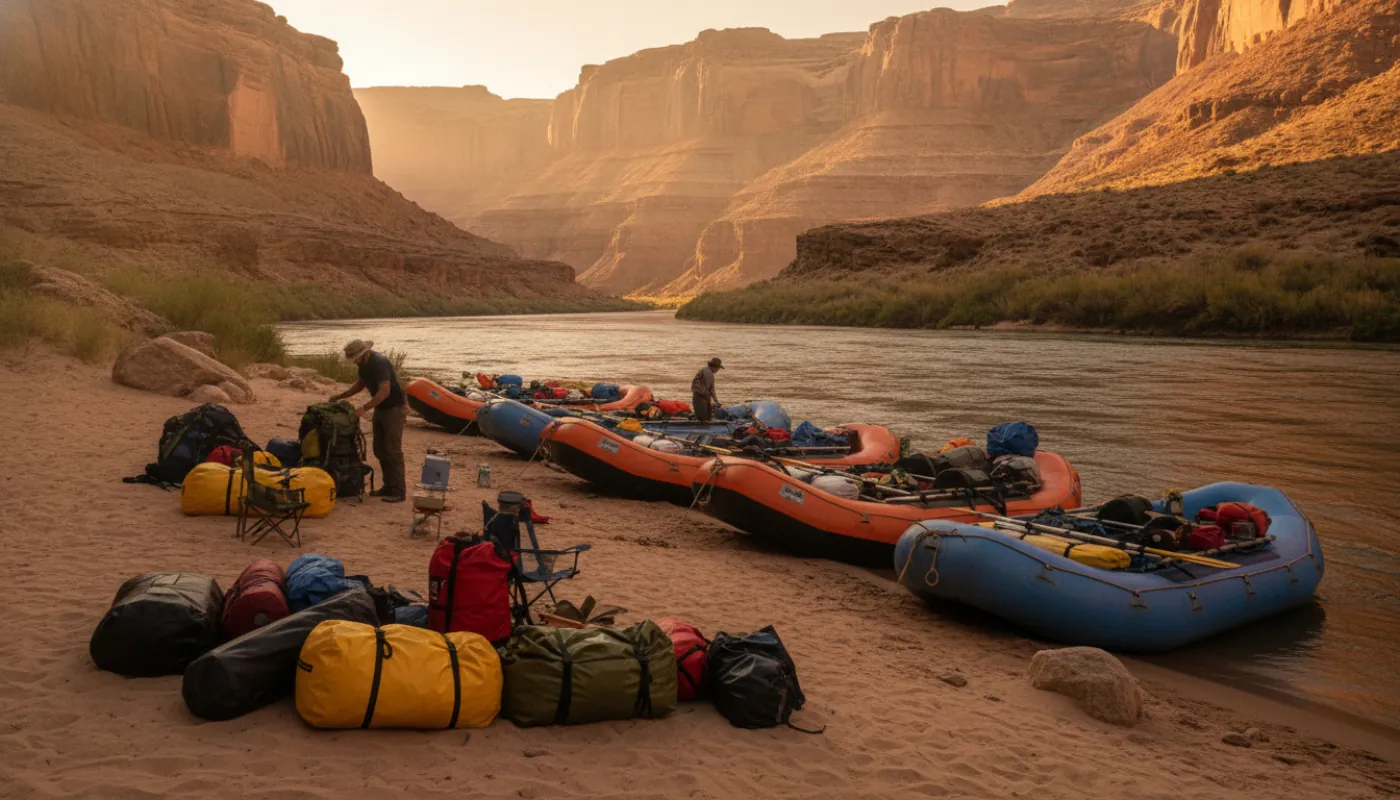
How you pack matters as much as what you pack. Dry bags come in different sizes; a 5–10 liter bag holds clothing, a 10–20 liter holds a sleeping system, and larger bags (30–50 liters) hold group gear. Most guided trips provide dry bags or dry boxes; confirm this with your operator before you leave home.
Pack items in rough categories: sleeping system (pad, sleeping bag, liner), clothing, toiletries, and personal items (sunscreen, medications, phone in a waterproof case). Compress clothing to save space. Wear your heaviest layer into the boat rather than packing it. If you're bringing multiple dry bags, mark them clearly with waterproof labels, your guide needs to identify them quickly.
Electronics (phones, cameras) should be in waterproof cases, not just plastic bags. Phone cases designed for river use take punishment and keep screens responsive. If you're bringing a camera, accept that it will get wet and choose one rated for water exposure. GoPro-style action cameras are reliable; DSLR or mirrorless bodies need serious waterproofing.
Never bring waterproof bags to the boat filled to bursting; packing at 80 percent capacity means seals work correctly and you have flexibility if plans change. Weight distribution in the boat matters, guides place heavier bags low and toward the center. Uneven weight causes the boat to pull. If your outfitter gives you a weight limit per bag, respect it. A 30-pound dry bag is harder to handle and slows boat maneuvering.
What Not to Bring: The Equally Important List
Every item you don't bring is weight your guide doesn't carry and space that stays available. Most paddlers overpack. Leave behind cotton clothing, jean anything, and heavy outerwear. Skip hairdryers, curling irons, and other AC-only devices. Your guide is not a sherpa, and the river trip is not the time to haul luxury items.
Alcohol policies vary by outfitter and location; many trips prohibit it entirely. Ask before you pack. Glass containers are prohibited on most river trips: they shatter, create sharp hazards, and pack poorly. Drones are banned in national parks and wilderness areas, which covers most classic river corridors, leave them home unless you've confirmed they're allowed on your specific stretch. Leave cameras with large telephoto lenses at home unless you've confirmed space with your operator. Jewelry, watches, and valuables should stay home; river trips are hard on expensive items.
Don't bring a separate entertainment system (book, cards, games) unless it's specifically a slow float. Multi-day rafting trips are full: hiking, paddling, navigating terrain, camp cooking. Downtime is rest, not boredom. Your phone (powered down except for photos) is enough.
Before your trip, email your outfitter with a list of what you're planning to pack. Most guides are happy to give you feedback and tell you what's genuinely unnecessary for their specific trip.