Packing for a multi-day guided backpacking trip is simpler than going solo: your guide handles navigation, often carries group supplies, and knows the route inside out. But "simpler" doesn't mean "guess." Show up underprepared and you'll be miserable or stranded. Show up overstuffed and you'll resent every pound by day three.
The difference between a smooth trip and a rough one often comes down to understanding the division of labor: what your outfitter provides, what you must bring, and what makes life genuinely better on the trail. Most trip reports mention the same mistakes: people forgetting socks, bringing the wrong layer, or hauling gear that never gets used. This guide cuts through that noise.
Understanding What Your Guide Provides
Your guide isn't your personal porter, but they do carry shared weight. Before you buy anything, confirm exactly what your outfitter supplies. Ask directly: Do they provide tents? What about sleeping bags? Cooking gear? Water filtration? The answer varies wildly between operators and regions. A backcountry outfit in the Sierra might supply a three-season tent, sleeping pad, and stove. An international expedition outfit might expect you to bring your own everything except the itinerary.
Get this in writing. Misalignment here wastes money and creates trip-day stress. Many operators include a detailed packing list in their confirmation email or pre-trip info packet. If yours doesn't, email and ask. Request specifics: Can sleeping bags handle the forecasted low temperatures? Are pads inflatable or foam? What fuel do the stoves burn? A guide who provides gear that doesn't work at elevation or in cold nights is a red flag.
Your guide also carries safety items you won't pack individually: usually a comprehensive first aid kit, extra water treatment, emergency communication gear, and repair supplies for shared equipment. Ask what they carry so you don't duplicate. But this never replaces your personal first aid kit and Ten Essentials. Group redundancy saves lives; personal neglect kills trips.
The Ten Essentials are the safety system the National Park Service defines as:
- Navigation: map, compass, and downloaded offline maps
- Sun protection: sunscreen, SPF lip balm, sunglasses, hat
- Insulation, extra clothing layers beyond what you're wearing
- Illumination, headlamp plus a backup power source
- First-aid supplies, your personal kit
- Fire, lighter or matches and a firestarter
- Repair kit and tools: knife or multi-tool, tape, cordage
- Extra food, a day's buffer beyond your plan
- Extra water, plus the means to treat more
- Emergency shelter: a light bivy, tarp, or space blanket
On a guided trip your guide covers several of these at the group level, but confirm which, and never assume. Fire and an emergency shelter are the two that people most often skip and most often need.
Clothing Systems for Multi-Day Trips
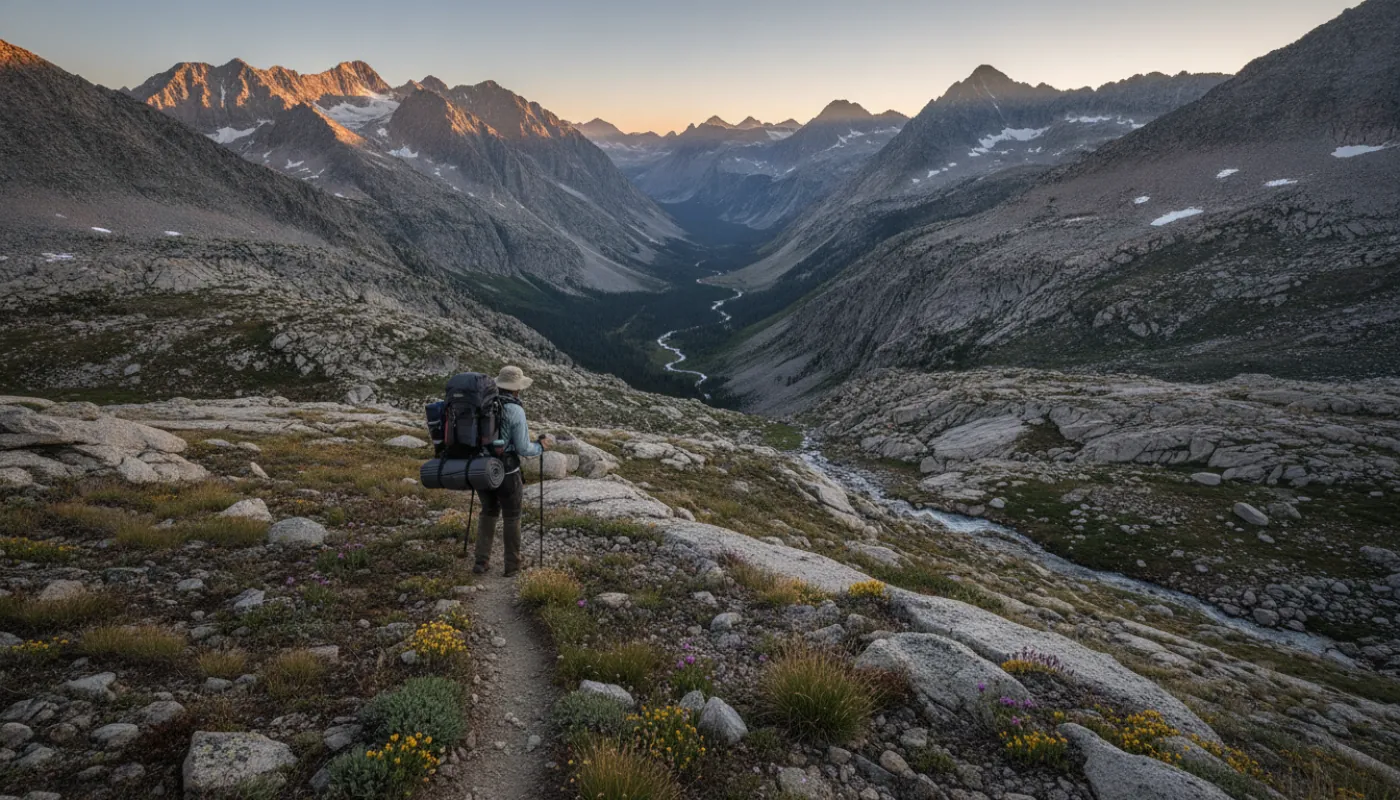
Bring more socks than you think you need, then add two more pairs. Damp feet are the gateway to blisters, and blisters end hikes. On a three-day trip, pack at least four pairs, one on your feet, three in your pack. Merino wool costs more upfront but doesn't stink after three days. Cotton socks are a false economy.
Your base layer should wick moisture away from skin, regardless of temperature. Merino wool or synthetic (polyester, nylon) work; cotton doesn't. On warm trips, a single lightweight base layer suffices. For cool or cold trips, bring a midweight option and test it at home first. Nothing is worse than discovering your base layer bunches up inside your pack on day one of a remote trip.
Insulation is where most people overpack. A synthetic or down puffy jacket works as both active insulation (worn while hiking in cold) and sleeping warmth (worn in the tent at night). Insulated jackets aren't temperature-rated the way sleeping bags are, so judge by loft and fill: a lightweight puffy handles most three-season camp chill, and you want more fill the colder the forecast. Down is lighter and packs smaller; synthetic retains warmth when wet and costs less. The trade-off depends on weather and budget.
Rain gear must be both you and your backpack. A rain jacket keeps you dry; a rain skirt or pants protect your legs and top of your pack. Cheap ponchos don't work for hiking, they flap in wind and snag on brush. Invest in a jacket rated for your trip's conditions (a 10,000mm column will handle anything short of a monsoon). Your guide will resupply water, but you still need to protect it from downpour.
Bring two shirts: one for hiking, one for camp. Your hiking shirt gets sweaty and stays damp; your camp shirt stays dry. A lightweight merino or synthetic hiking shirt and a simple T-shirt cover 90% of backpacking weather. Avoid cotton and anything heavy. On three-day trips, four layers total (base + insulation + rain + camp) covers cold, warm, and everything in between.
Sleep System Essentials
Your sleeping bag is the anchor of your sleep system, and temperature rating matters more than comfort myths. A bag rated about 10 degrees colder than your trip's low temperature lets you sleep. A bag rated too warm means restless nights and regret. If the forecast says 35°F lows, bring a bag good to 25°F. Your pad contributes insulation too, closed-cell foam pads (R-value ~1.5–2) work for summer; higher R-values (3–5) handle spring and fall; pads rated 5+ handle winter and alpine.
If your guide doesn't provide the sleep system, rent it instead of buying. Entry-level backpacking bags and pads cost $300–$600, and renting for a trip costs $30–$60. Rent once or twice to figure out what you like, then buy. Many outfitters have rental partnerships or keep spare gear for last-minute needs.
Bring a thin sleeping pad liner, it adds an inch of insulation and protects your bag from ground moisture. In wet conditions, this small layer prevents condensation inside your bag. A pad liner costs $20–$40 and weighs ounces.
Your pillow is either a stuff sack stuffed with dry clothes (free, light, doubles as storage) or a simple inflatable pillow ($15–$30). Don't bring a full pillow from home, it's awkward and unnecessary. The stuff-sack method works fine and saves pack space.
The Day Pack and Hydration
Your day pack, the one you carry during hiking, should hold 15–20 liters and ride high on your shoulders. It's not the main backpack you sleep with. This is where water, snacks, layers, and personal items live. A poorly fitting day pack causes shoulder and back pain fast.
Hydration strategy depends on the route. Ask your guide about water availability: are there reliable streams to filter, or is water scarce? If water is abundant, bring a lightweight 2-liter bottle and a pump filter or inline filter. If water is scarce, bring 1.5–2 liters of capacity and plan resupply stops. Filters that screw onto bottles (like squeeze filters) work well for guided trips where you filter as you go.
Bring high-calorie, lightweight snacks: trail mix, energy bars, nuts, dried fruit, jerky, instant oatmeal packets. Your guide usually handles lunch (or you coordinate), but having your own backup prevents bonking mid-day. Aim for 200–300 calories per snack item. Dense foods (nut butter packets, chocolate) have better calorie-to-weight ratios than granola bars.
Sunscreen, insect repellent, lip balm with SPF, and a small towel live in your day pack. A quick-dry microfiber towel (under 100 grams) handles washing up and drying off better than cotton. Include a pack cover or dry bags to protect electronics and important documents from rain and river crossings.
Navigation, First Aid, and Repair Basics
Even on a guided trip, you navigate alongside your guide. Bring a map of the region and ideally download offline maps on your phone. Your guide will navigate, but knowing where you are prevents anxiety and teaches you the country. Maps weigh ounces; regret weighs pounds.
Your personal first aid kit should include blister treatment (moleskin, athletic tape, anti-blister balm), pain reliever, allergy medication if you have allergies, and any personal prescriptions. Your guide's kit handles major injuries; yours handles the daily stuff. A small ziplock bag with essentials (bandages, pain reliever, antibiotic ointment, anti-itch cream) takes minimal space.
Bring a multi-tool or knife for cutting, and a small repair kit: duct tape wrapped around a card (saves weight), safety pins, a needle and thread, and one patch kit for your sleeping pad (if relevant). Most gear breakage is minor (a torn strap, a leaking pad valve), and a small repair kit fixes it in five minutes rather than leaving you helpless.
A headlamp or flashlight is essential. A rechargeable LED headlamp weighs ounces and runs 20+ hours on a charge. Bring a backup power source (spare batteries if your headlamp takes them, or a small power bank if it's a sealed rechargeable), so a dead light never leaves you scrambling in the dark. Never rely on your phone flashlight.
Toiletries should be minimal: biodegradable soap, toothbrush, toothpaste, sunscreen, lip balm, and personal hygiene items. Use a small ziplock bag and bring only what you'll use. Your guide will explain the camp bathroom protocol: usually pee at least 200 feet from water, dig a cathole 6–8 inches deep and at least 200 feet from water, trails, and camp, and pack out toilet paper in a dedicated bag. Sunscreen and insect repellent matter more in the field than anything else.