A five-day backpacking expedition across remote terrain demands more than enthusiasm and a good pack. Your body needs months of preparation to handle the continuous strain of carrying weight uphill, day after day, in demanding weather. Most fence-sitters don't book because they underestimate what their current fitness can handle, or they're simply uncertain how to bridge the gap. The right training plan turns that doubt into confidence. You're not training to summit a peak or sprint; you're conditioning yourself to be efficient and durable over multiple days on trail. This guide walks you through the exact preparation approach that expedition guides recommend: progressive aerobic training, targeted leg and core strength, load-bearing simulations, and a realistic timeline that accounts for real-world work and recovery.
Building Aerobic Capacity
Your cardiovascular system is the engine of multi-day backpacking. Unlike a day hike where you push hard for a few hours and recover, expedition backpacking requires you to sustain moderate effort for six to eight hours daily over consecutive days. This aerobic foundation prevents early fatigue and helps you maintain a steady pace in thinner air at higher elevations.
Start with three weekly sessions of moderate-intensity cardio. Running, cycling, elliptical work, or even fast hiking on flat ground all build the same aerobic base. You're looking for an easy, sustainable pace where you can still hold a conversation, roughly 60 to 70 percent of your maximum heart rate. Each session should last 30 to 45 minutes in early weeks, building toward 60 minutes by month three. One long, slower session per week (45 to 75 minutes) trains your body to sustain effort while partially depleted of glycogen, much like how you'll feel late in a multi-day trip.
Two weeks before your expedition, dial back volume by 20 to 30 percent while keeping intensity moderate. Your body needs time to absorb the training stress and arrive at the trailhead fresh, not fatigued. Overdoing cardio in the final weeks is a common mistake, more training doesn't equal better performance if you're still recovering.
Strengthening Your Legs and Core
Carrying 30 to 50 pounds up thousands of feet of elevation gain will expose every weakness in your quads, hamstrings, glutes, and lower back. Legs support the load; your core stabilizes it and prevents injury. Two to three strength sessions per week, targeting these areas, are non-negotiable for preventing pain and maintaining efficiency late in the trip.
Squat variations form the foundation. Goblet squats, barbell back squats, or even pistol squat progressions build the quad strength needed for steep descents and loaded climbs. Perform these two times per week, aiming for three to four sets of eight to twelve repetitions. Pair squats with single-leg deadlifts or step-ups with dumbbells to address muscular imbalances. Most hikers neglect their glutes, but they're the engine for uphill work. Glute bridges and weighted step-ups should feature in every session.
Core strength isn't about visible abs; it's about anti-rotation and stability under load. Planks held for 45 to 60 seconds, bird dogs, and suitcase carries (walking while holding a heavy dumbbell on one side) teach your torso to resist twisting and maintain posture when fatigued. Consistent core work prevents lower back strain, the injury that most commonly derails expeditions. By week eight of training, add weight to these movements, backpacking with a heavy pack demands more than bodyweight stability.
Training with Elevation and Load
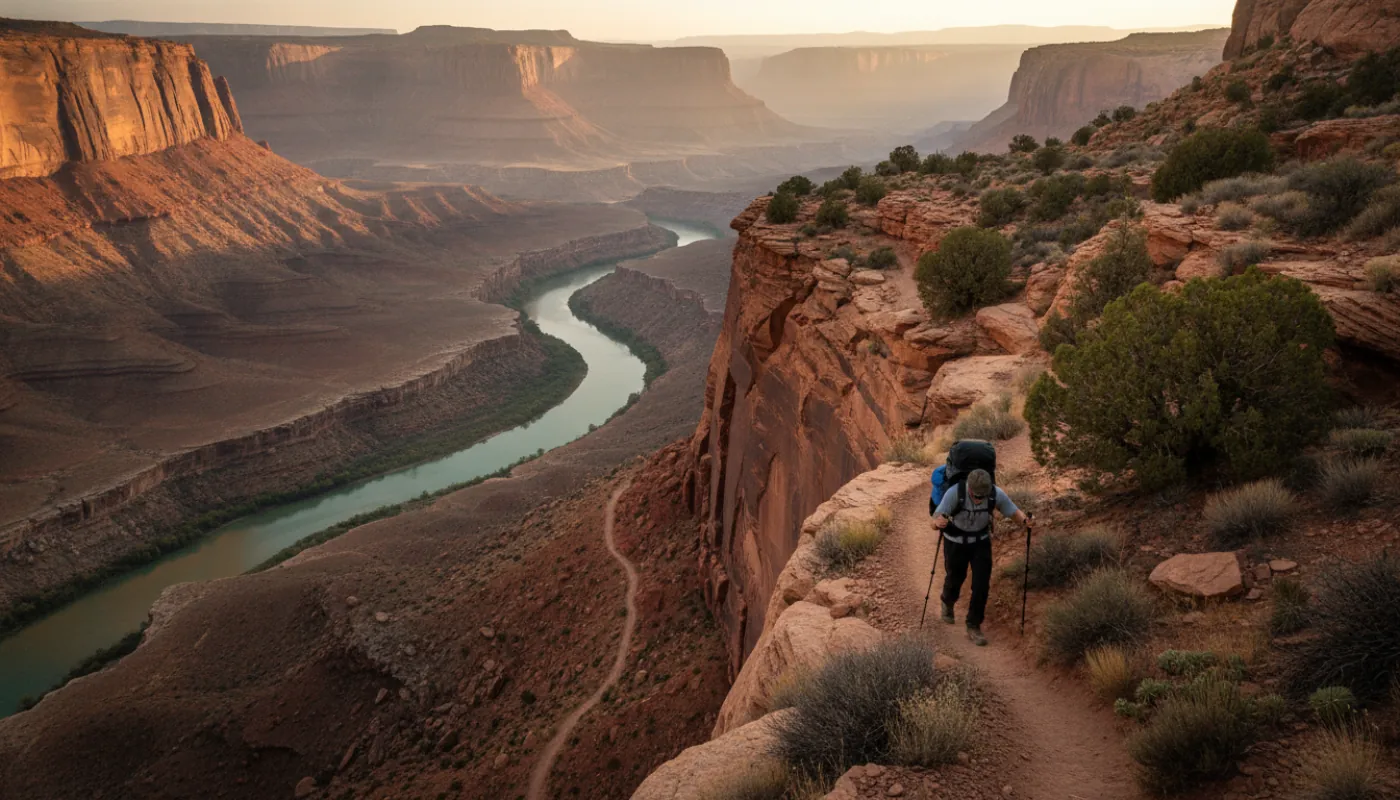
Strength and cardio build the foundation, but training with actual weight and elevation replicates expedition demands. Loaded hikes are the most specific training available and should form the cornerstone of your final four weeks before departure.
Start by hiking trails with 500 to 800 feet of elevation gain wearing a pack weighted to 60 percent of what you'll carry on expedition. A common guideline caps a loaded backpacking pack at about 20 percent of your body weight (for a 175-pound hiker, roughly 35 pounds), with heavier multi-day loads sometimes running a little higher; lighter is almost always better. If you weigh less or plan a lighter-weight trip, adjust accordingly. Two loaded hikes per week, spaced with at least one rest day between them, allows your body to adapt without overtraining. Gradually increase pack weight and elevation gain over successive weeks. By your final training block, you should complete at least one hike matching or exceeding the longest day of your upcoming expedition: same elevation, same pack weight, same sustained duration.
Elevation matters more than most training plans acknowledge. High-altitude backpacking impairs your oxygen-carrying capacity and slows your pace significantly. If you live at sea level and your trip sits above 8,000 feet, spend time at elevation before your expedition if possible. Arriving two to three days early gives your body a chance to begin acclimatization. If travel distance prevents this, prioritize lower-intensity days early in your expedition and avoid pushing hard on the first two days, when your body is still adapting to thinner air.
Progressive 8-Week Training Plan
Eight weeks provides sufficient time to build aerobic capacity, strengthen key muscle groups, and practice with expedition-weight loads. Weeks one and two establish baseline fitness; weeks three through six build strength and aerobic power; weeks seven and eight taper and prepare your body for peak performance.
Weeks 1–2: Three cardio sessions of 30 to 45 minutes each at moderate intensity. Two strength sessions targeting legs and core with moderate weight and higher repetitions (12 to 15 per set). One lighter, exploratory loaded hike with 20 to 25 pounds. Weeks 3–4: Maintain three cardio sessions but increase duration to 45 to 60 minutes. Add a second strength session per week and begin heavier weights with lower reps (8 to 10). Two loaded hikes with 35 to 40 pounds. Weeks 5–6: Emphasize loaded hikes. Two to three hikes per week, progressively increasing elevation and pack weight to 45 to 50 pounds. Maintain one harder cardio session per week; dial back steady-state cardio as hiking volume increases. One heavier strength session focused on weak points. Weeks 7–8: Reduce training volume by 20 to 30 percent. Complete one final loaded hike matching your expedition's hardest day. One moderate cardio session per week. Minimal strength work focused on maintenance, not growth. This taper allows your body to supercompensate: arriving stronger, fresher, and more resilient than mid-training.