Choose Your Guide With Eyes Open
Booking a wilderness expedition is an act of trust. Your guide controls the pace, reads the weather, carries the safety gear, and makes the call in emergencies. No amount of scenic beauty justifies betting your safety on an unvetted operator. The industry lacks uniform licensing in most states, which means a polished website and confident tone tell you almost nothing about actual competence. Before you hand over a deposit, you need answers, concrete ones, not marketing copy.
Understanding Guide Certifications and Credentials
The gold standard for mountaineering and climbing guides in North America is American Mountain Guides Association (AMGA) certification. AMGA guides pass standardized exams, maintain continuing education requirements, and operate under a published code of ethics. If your trip involves rock climbing, ice climbing, or ski mountaineering at elevation, ask whether your guide holds AMGA Single Pitch Instructor (SPI), Rock Guide, or Alpine Guide credentials. Not all wilderness trips require AMGA certification, day hikes and river tours operate under different frameworks, but the standard matters for technical terrain.
Beyond AMGA, understand what credentials are relevant to your specific activity. One applies to nearly every wilderness trip: a current Wilderness First Responder (WFR): the standard medical certification for guides, earned through NOLS, SOLO, or Wilderness Medical Associates (a shorter Wilderness First Aid, WFA, is the floor for lower-risk day trips). Kayak and raft guides should hold at minimum a Swiftwater Rescue Technician (SRT) or equivalent water-rescue certification. Backcountry skiing guides should carry avalanche training from the American Institute for Avalanche Research and Education (AIARE): the recreational track runs Level 1, Avalanche Rescue, and Level 2, and working guides hold the professional Pro 1 or Pro 2 credentials. Hiking guides leading trips in parks like Yellowstone or the Grand Canyon should be familiar with park-specific hazards and regulations. Don't settle for "I've been doing this for years". Ask for the specific certifications that prove formal training in the activity you're pursuing.
Ask About Experience and Trip-Specific Expertise
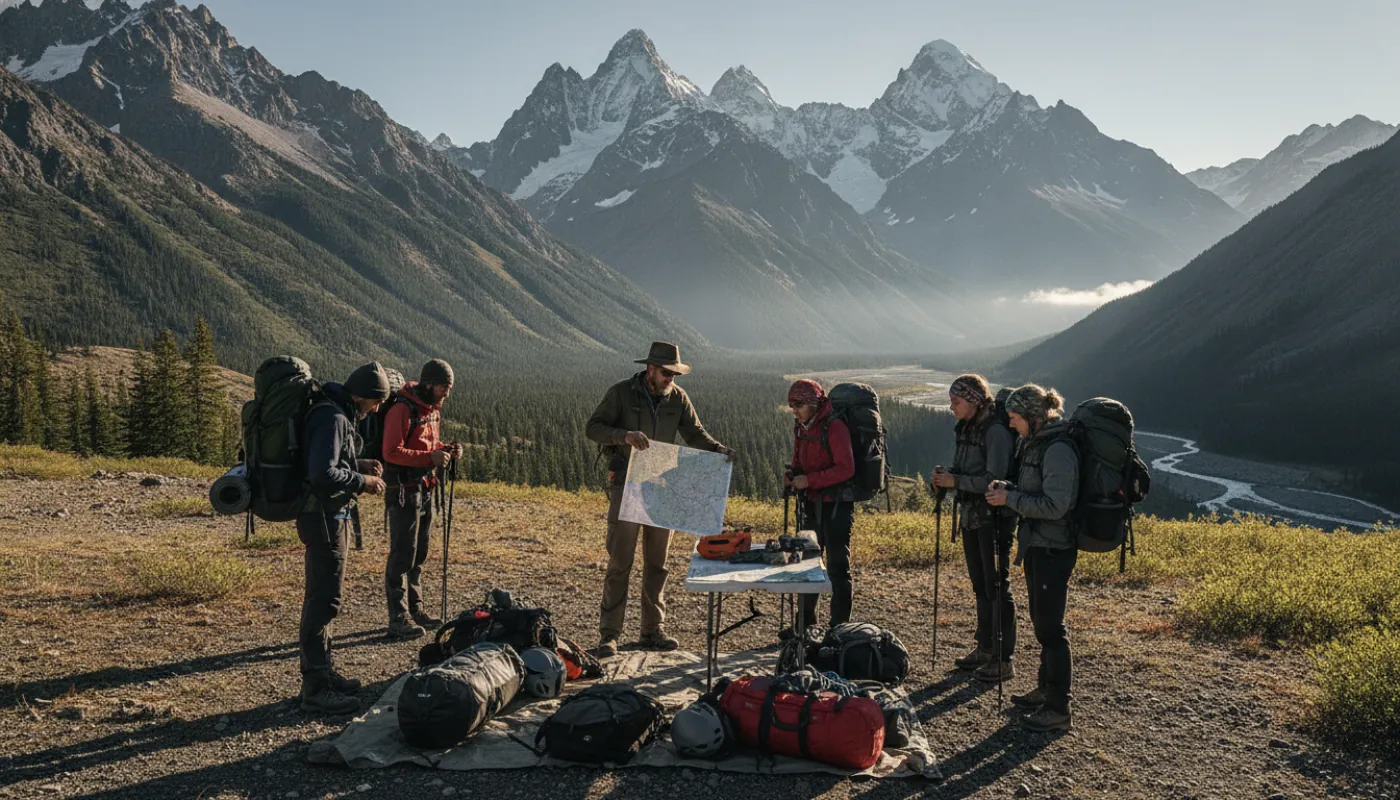
Years of experience matter, but relevance matters more. A guide with 20 years of backcountry experience in the Rocky Mountains may not be the right fit for desert slot canyons in Utah, where water flow, navigation challenges, and permit requirements are entirely different. Ask your guide about their specific experience on the route or in the region you're booking. How many times have they led this exact trip? What was the most recent? Ask them to name obstacles they've encountered on past trips: water crossings that were higher than expected, navigation challenges, sections where clients struggled.
Also ask what the guide does when conditions change. Weather forecasts shift. Water levels rise. Trail conditions deteriorate between seasons. A good guide has contingency plans and isn't committed to a rigid itinerary regardless of conditions. Ask what percentage of trips they've had to modify, and what alternatives they offer if the original plan becomes unsafe. If a guide sounds overconfident that "conditions will be fine," that's a red flag. The wilderness doesn't cooperate with marketing schedules.
Verify Safety Protocols and Insurance
Every guide service should carry general liability insurance that covers clients. Ask to see proof of coverage, not just be told that it exists. Verify the coverage limits are reasonable for the activity level (a multi-day mountaineering expedition requires higher limits than a day hike). Ask whether the insurance is underwritten by a company that specializes in adventure sports; standard outdoor-recreation insurers sometimes exclude high-risk activities or require additional riders.
Ask, too, whether the service holds the permit required to guide where you're going. Commercial guiding on federal land requires a National Park Service commercial-use authorization or concession, a U.S. Forest Service special-use permit, or a BLM permit, and a legitimate outfitter can name theirs without hesitation. A guide operating on public land without one is cutting a corner that tells you something about the rest of their operation.
Beyond insurance, ask about safety protocols. What's the client-to-guide ratio? How many guides accompany large groups? What communication systems do they use in the backcountry: satellite communicators, InReach devices, cell coverage planning? Ask what safety gear is provided and what clients must bring. Ask about the guide's training frequency, how often do they practice first aid or rescue skills? Wilderness medical certifications run on a roughly two-year recertification cycle with annual CPR, and responsible operations practice their rescue skills regularly rather than only at recert time. Request references from past clients, and call them. Ask whether the guide briefed them on risks, responded to their concerns, and prioritized safety over schedule.
Evaluate Communication and Client Reviews
A professional guide should have clear communication channels before the trip and be responsive to your questions. How quickly do they respond to emails? Are they willing to have a call or video meeting before the trip to discuss your fitness level, concerns, and expectations? Red flags include guides who are defensive about questions, who minimize hazards, or who make you feel rushed into a decision. Good guides are transparent about difficulty level and leave room for clients to ask for modifications as needed.
Read online reviews, but read them carefully. Vague praise like "best trip ever" tells you less than specific detail: "Our guide modified the route when I developed a blister and found an equally beautiful alternative." Negative reviews sometimes come from clients with unrealistic expectations, but patterns matter. If multiple reviews mention poor communication, lack of fitness screening, or guides who seemed unprepared, that's significant. Don't discount one bad review, but three similar complaints suggest a systemic issue.
Clarify Costs and What's Included
Get a detailed breakdown of what the cost covers. Does the guide provide meals, water, and snacks, or do you supply them? Does the fee include permits, park entrance fees, or shuttle transportation? Are gratuities expected separately? What's the cancellation policy, and what happens if the trip is canceled due to weather? A few questions here prevent misunderstandings and surprise costs.
Also ask about the business structure. Is this a sole proprietor, a small company, or a larger outfitter with multiple guides? Larger operations often have backup guides if your guide gets sick, and more structured safety and communication protocols. Smaller operators sometimes offer more personalized attention, but they have less redundancy. Neither is inherently better, but know what you're hiring. Ask whether the guide you book will be the guide who leads your trip, or whether you might be assigned someone else. Confirm this in writing before you pay the deposit.