Most outdoor adventure operators carry a "general liability" policy and assume the worst-case is covered. It usually isn't.
Standard commercial general liability (CGL) policies were written for retail businesses: coffee shops, dentists, accountants. The boilerplate exclusions hit guided adventure operations harder than almost any other segment. This is a plain-language walkthrough of the coverage gaps every operator should understand, written from claims-adjuster conversations and operator post-mortems, not from broker marketing.
What "standard CGL" usually covers
A vanilla CGL covers:
- Bodily injury or property damage caused by your premises (someone trips at your check-in office).
- Products and completed operations (someone is hurt by a piece of gear you sold).
- Personal and advertising injury (defamation in your marketing).
Limits are usually $1M per occurrence / $2M aggregate. Premiums for an adventure operator at that level land in the $4–18K range depending on activity.
That's the floor. Here's what it doesn't cover.
Gap 1: Participant injury during the activity itself
Read the policy. Most standard CGL forms exclude "injury to persons participating in athletic or sports activities." The exact wording varies, but the spirit is the same: the policy will defend you if a passerby is hurt by your operation, but it will not defend you if a paying participant is hurt during the activity they paid for.
Fix: a separate participant accident policy or a CGL endorsement that explicitly includes "participant liability." If the broker hesitates on this question, find another broker.
Gap 2: Vehicle and watercraft liability during the trip
Auto and watercraft liability are almost always separate policies. The CGL excludes "hired and non-owned auto" and "watercraft over 26 feet" and similar carve-outs.
Specific gotchas:
- Rented vehicles (shuttle vans for tours): hired-and-non-owned auto is the rider.
- Customer-driven side-by-sides on a guided ride: the participant's auto policy may decline coverage on a non-public road. You probably need an off-road equipment rider.
- Rafts and kayaks: watercraft endorsements normally cap at length-and-horsepower thresholds. Verify yours.
Gap 3: Activities outside the named operations
The policy lists the activities you sell. If you add a new one (say, a horseback operator starts offering an ATV add-on), and don't notify the carrier, a claim on the new activity will be denied.
Update the schedule of operations every time you add or drop an activity. Carriers will often add it at no charge if you ask before the renewal date.
Gap 4: Independent contractor guides
Most adventure operators rely on 1099 guides part of the year. The CGL covers your employees as insureds under the policy, but not contractors unless they're listed by name.
Worse: many state workers' comp boards now classify guides as employees regardless of the 1099. A "no employees" exemption on workers' comp does not protect you if a state audit reclassifies your guides.
Fix:
- Require each independent guide to carry their own professional liability policy.
- Add named contractors as additional insureds on your policy.
- Carry workers' comp even if you "have no employees", premiums for 1–2 guides are usually under $1,500/year and the audit risk is much higher.
Gap 5: Waiver enforceability is state-specific
A waiver is not insurance. It's a contract that, in some states, bars participants from suing for ordinary negligence. It almost never bars suits for gross negligence or recklessness, which is exactly where the high-dollar claims land.
State-level reality check:
- States where waivers are routinely upheld: TX, CO, UT, FL, AZ, CA (with caveats), and MT (which since a 2019 statute expressly enforces properly drafted recreational waivers).
- States where waivers are routinely struck down: VA, LA, WI (varies), NY (varies).
- Minor participants: in many states a parent cannot waive a child's right to sue, though a dozen or so states enforce parental pre-injury waivers in at least some circumstances. The strongest defense is a waiver plus an industry-standard assumption-of-risk briefing.
If you operate in a state hostile to waivers, your insurance limit matters more than your paperwork.
Gap 6: Punitive damages
Most policies expressly exclude punitive damages from coverage. In a gross-negligence case, the punitive component can dwarf the compensatory damages. You pay punitive awards out of pocket.
The only mitigation is operational: defensible decision-making, documented training, peer review of the safety plan.
Gap 7: Search and rescue and evacuation costs
If a participant requires helicopter evacuation, the bill, often $30–80K, typically lands with the participant. But many operators get sued anyway on the theory that the operator's negligence caused the need. Your CGL may or may not cover the litigation.
Add evacuation-reimbursement language to your booking terms. Encourage participants to carry their own search-and-rescue / evacuation coverage (Global Rescue, Medjet, or similar memberships).
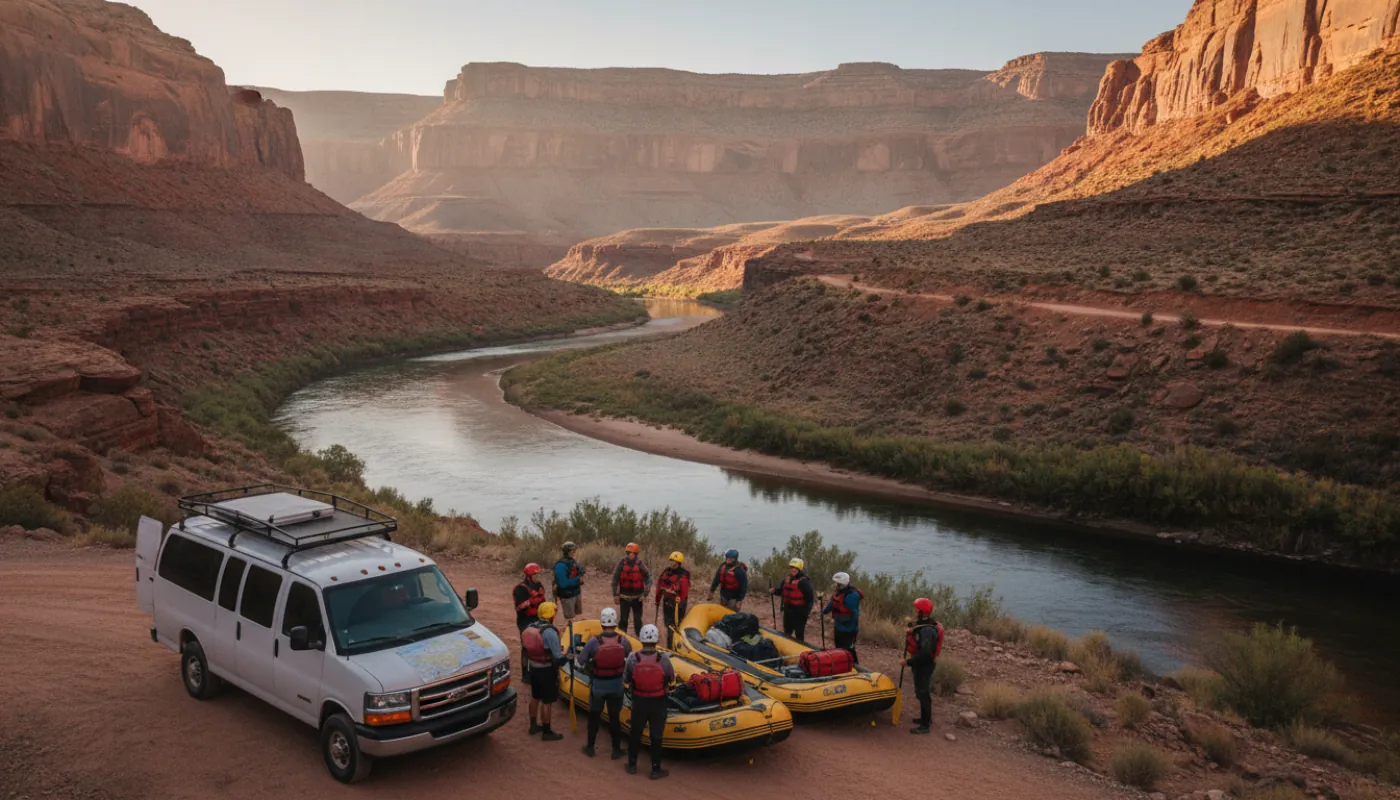
The minimum-viable insurance stack for a serious operator
- Commercial General Liability with explicit participant-liability endorsement, $1M/$2M minimum, $2M/$4M for high-risk activities.
- Commercial Auto including hired-and-non-owned coverage if you ever rent or borrow vehicles.
- Workers' Comp in every state where you have guides, employee or contractor.
- Equipment & Cargo coverage for owned gear (rafts, ATVs, climbing kit), replacement cost, not actual cash value.
- Cyber liability if you store customer data and credit card info (which you do, even a Stripe-only operator usually retains some PII).
- Umbrella/excess liability of $2–5M sitting above the primary policies.
Questions worth asking your broker
- "Is participant injury during the named activity covered or excluded, show me the form."
- "What happens to coverage if I add a new activity mid-year?"
- "How does the policy treat independent-contractor guides?"
- "What's the punitive damages position?"
- "Are there activity-specific carve-outs I should know about?"
If the broker can't answer in specifics, your policy probably has more holes than they realize.
If you operate guided adventure tours and want to compare what other operators are running, list your operation on Adventure Tour Hubs, the platform is built for operators by people who have signed too many of these policies.