Most adventure operators earn the large majority of their annual revenue in a short peak window of just a few months. The shoulder months, roughly April–May and September–October in most US markets, are where decent operations become great ones, and where most operators leave money on the table.
This is a working operator's playbook for filling shoulder weeks. None of it is "discount harder."
Why "discount the peak product" almost never works
The temptation, every October, is to email last year's customer list with 30% off the same tour. It doesn't work for two reasons:
The product genuinely is different in shoulder season. Cold mornings, shorter days, unsettled weather. Customers know it. A discount on a worse version of the trip reads like a discount on a worse version of the trip.
You train your customers to wait. Anyone who books once at 30% off will wait for 30% off forever. Peak-season bookings shift later. You haven't grown the pie, you've shifted it.
The shoulder-season fix is a different product, not a cheaper one.
Move 1: Pair the activity with something that improves in shoulder months
Look at what genuinely gets better off-peak in your region:
- Wildlife: elk rut, salmon runs, fall raptor migration, spring bird returns, mating-season ungulates.
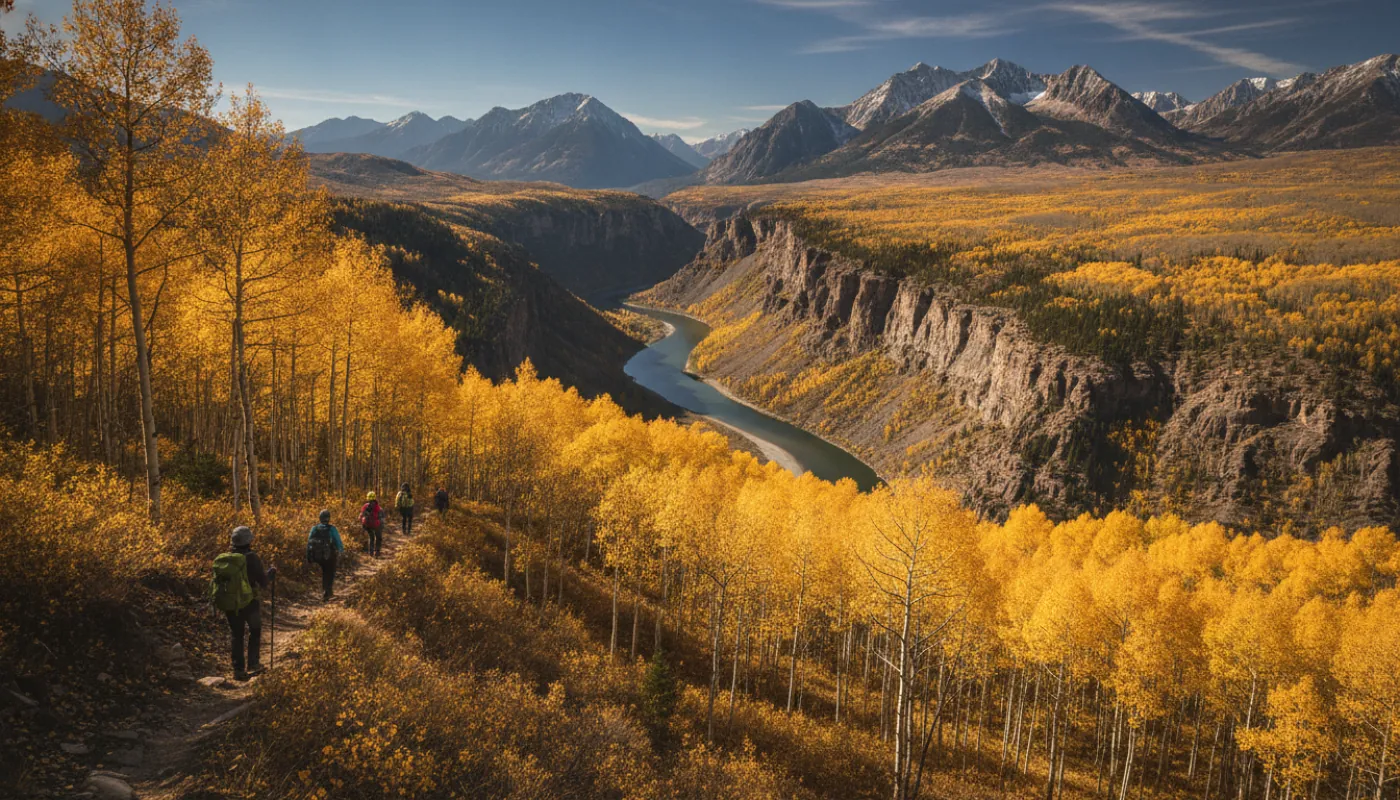
- Geology and light: slot canyons in low sun, fall foliage, alpine larch, autumn aspen, desert in March bloom.
- Cultural events: harvest festivals, hunting seasons, town events.
- Quiet: uncrowded trailheads, empty hot springs, "we had the whole canyon to ourselves" experiences.
The shoulder-season tour is named for what only exists in shoulder season. "Aspen-Gold ATV Loop," "Salmon-Run Raft," "Pre-Dawn Geology Walk," "Empty Trail Backcountry Day."
Same gear, same staff, different listing. Two operators that did this well in the past five years:
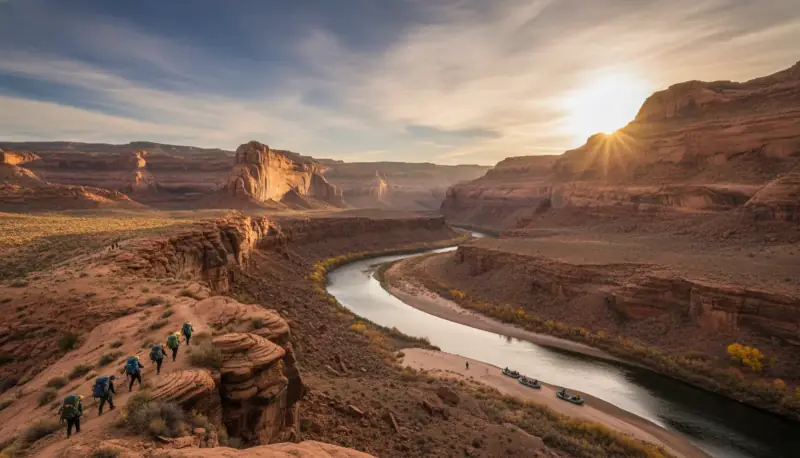
- A southern Utah operator added a March slot-canyon photo tour, fundamentally the same canyoneering trip, sold as a low-sun shoot. Booked out solid in a month previously running 30% utilization.
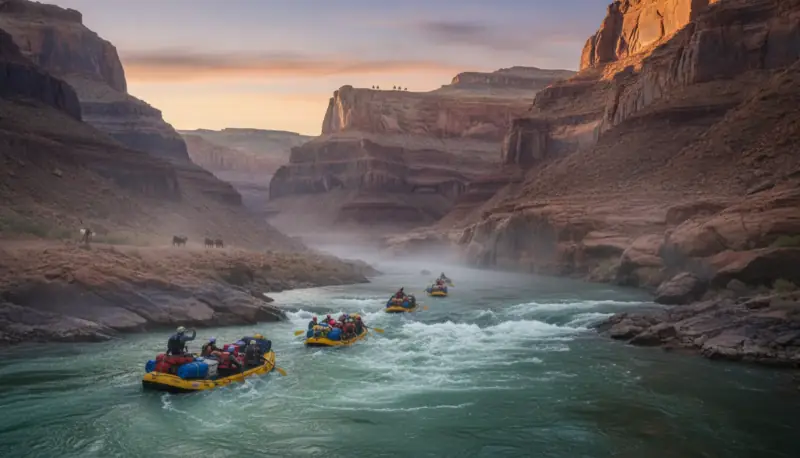
- A Colorado raft operator started a "September Salmon Spawn" half-day where guides paddle a calm late-summer stretch and stop to walk the spawning beds. The float is easy; the narrative is the product.
Move 2: Reposition for adults who can travel midweek
Peak season runs on family vacation. Shoulder season runs on couples, retirees, friend groups, corporate teams, and remote workers, people who can travel Tuesday to Thursday.
What that audience wants:
- Smaller groups (2–6 is gold).
- Better food.
- Slower pace.
- Storytelling and depth over thrill volume.
If your peak tour is "8 guests, 3 hours, action-dense," the shoulder version is "4 guests, 5 hours, includes a sit-down lunch, ends with a hot drink."
The unit economics of the smaller-group tour are usually better. You raise the price 30–50%, cut the group size in half, and still make more per guide-hour than peak.
Move 3: Sell the micro-trip
A 90-minute "introduction" or "after-work" tour fills early-evening shoulder demand from local audiences that don't book full-day trips. Examples:
- A Sedona horseback operator runs 60-minute sunset rides Mon–Thu Oct–Nov, priced $79. Pure local demand. No marketing spend.
- A Maine sea-kayak outfitter runs "harbor sunset" 75-minute trips Oct 1 through close. Books out on calm-day forecasts.
- A snowmobile operator in northern Michigan runs 90-minute "first snow" beginner orientations from a base lodge in late November, entire purpose is teaching, not destination.
Micro-trips do three things at once: they fill schedule gaps, they get locals on the books (who become referrers), and they generate reviews when peak-season schedules are too full to chase reviews.
Move 4: Pre-sell next peak season at a discount
If you have a real loyalty list, the legitimate use of shoulder-season discounting is forward bookings for next peak, not present-day shoulder bookings.
Examples that work:
- "Book your June 2027 trip by November 15, 2026, save 15%."
- "Returning-customer-only pre-sale window, October 1–31."
This shifts cash forward, locks in capacity, and trains customers to plan early, the opposite of the "wait for a discount" pattern.
Move 5: Custom and private upcharges
Shoulder-season weather variance kills public scheduled departures. A 4-person minimum that doesn't hit means everyone reschedules. Solve it by switching public-departure logic to private-by-default in shoulder months:
- Peak season: "Public departures daily, $109 pp."
- Shoulder: "Private departures only, $599 for up to 4 guests, $99 per additional."
Same revenue per departure at 4 guests. Higher revenue at smaller groups. No public-departure minimum to miss.
Move 6: Sell to other operators
Other operators with overlapping audiences are often hungry for shoulder-season referral content. Examples:
- A peak-summer rafting operator with a closed October books their last 4 weeks of staff on a partner operator's horseback rides, half the per-guest cost goes to the staffing operator.
- A ski resort runs a "pre-season conditioning hike" using a local guiding outfit's permits and guides, sold through the resort's customer list.
These deals are rarely advertised. They show up at industry meetups, regional outfitter association meetings, and on threads in operator forums.
Pricing structure for shoulder products
A few rules of thumb from operators who run shoulder products well:
- Price the shoulder tour higher per-person than the peak tour. Smaller groups, longer durations, premium framing.
- Never publicly discount the peak tour as a shoulder offer. Different product, different listing, different SKU.
- Run "first 6 weeks" promotional pricing, not perpetual discounts. Soft-launch pricing converts your loyalty list and lets you build reviews before mainstream visibility kicks in.
The one-page test
Before you spin up a shoulder offering, write a one-pager that answers:
- What about this month is genuinely better than peak month for this activity?
- Who is the buyer (couple, retiree, local, corporate)?
- What's the small thing this tour does that the peak tour can't?
- How is it priced relative to peak, and why does that price make sense to the customer?
If you can't fill the page, you don't have a shoulder product yet.
If you operate adventure tours and want to compare what others in your region are running for shoulder months, list your operation on Adventure Tour Hubs and browse the directory.